This section provides answers to frequently asked questions about SUNY Cortland's Procurement Card (P-Card) program including usage guidance restrictions and compliance requirements.
Questions about Subscriptions, Renewals, & IT Purchases
Important: All hardware and software purchases must be reviewed and approved by Information Resources (IR) prior to purchase, regardless of payment method (P-Card or PO).
See further guidelines regarding Subscriptions, Renewals, & IT Purchases.
What is Card-Sharing?
- Definition:
- Card-sharing is when your P-Card is used by anyone other than the individual whose name appears on the card. Card-sharing is expressly prohibited.
- What counts as card-sharing?
- Letting a supervisor or colleague "place the order for you" by giving them your physical card or giving them the card details.
- What to do instead:
- If the P-cardholder is unavailable (out of the office), someone in the dept./office may reach out to the P-Card Administrator and they will be able to review and place the order with their own P-Card.
- Why it’s not allowed:
- Violates SUNY & NYS internal control standards.
- Increase risk of:
- Fraud
- Unauthorized purchases
- Data breaches
Key takeaway: If you didn't place the order yourself, it's a violation.
What is Split Ordering?
- Definition:
- When a cardholder separates a single purchase into 2 or more P-Card transactions (whether on the same day or over multiple days) with the intent to bypass procurement rules (i.e., single-transaction dollar limits, monthly limits, etc.).
- Examples:
- Buying $1,000 of equipment by charging two $500 P-Card transactions when the single-purchase limit is $500.
- Making multiple smaller charges to avoid obtaining multiple quotes.
- Placing repeated orders for the same items over a short period when the total need was known in advance.
- Why it’s not allowed:
- Violates SUNY procurement and internal control requirements.
- Undermines fair competition and transparency.
- May result in audit findings, card suspension, or disciplinary action.
What credit card fees are OK to pay?
Credit card fees should not exceed 5% or $100 (whichever is less).
How do I request a temporary dollar limit increase?
Email the P-Card Administrator and cc: Associate Director of Purchasing & Accounts Payable with the following:
- Supervisor approval
- ROPC (for requests of $2,500 or more)
- A copy of the invoice
- Supporting details about the purchase, including what it is for and when it is needed (providing as much detail as possible will help expedite the approval process)
What is Backup Documentation and why do I need it?
Backup documentation is the supporting proof for each P-Card transaction. It must clearly show:
- What was purchased
- Who the vendor was
- When the purchase was made
- How much the total cost was
- Why the purchase was necessary for official University business
Why is Backup Documentation required?
Backup documentation is required to:
- Confirm that purchases are appropriate and allowable
- Meet audit requirements (internal audits, SUNY, & OSC)
- Protect cardholders and departments by demonstrating proper use of State funds
What documentation is required for events & specific purchases?
For events and certain types of purchases, a receipt alone is not sufficient. The following documentation must be included with your P-Card log (when applicable):
- Event Announcement (email) or Flyer
- Confirms the event served an official University purpose.
- Agenda
- Shows the timeline and business purpose of the event.
- Attendee List
- Verifies that attendees were authorized participants.
- Business Purpose/Program Description
- Explains how the event supports the department or University mission.
- Advertising Materials
- Required for printing or promotional purchases (e.g., advertisements).
Please reach out to the P-Card Administrator at x2407, if you are unsure what to include.
What happens if backup documentation is missing?
Missing or incomplete documentation may result in:
- Follow-up requests from the P-Card Administrator
- The charge being deemed non-compliant, meaning it does not meet P-Card policy requirements
- Possible reimbursement to the campus by the cardholder if sufficient documentation cannot be provided
Key Takeaway: Backup documentation is more than just a receipt; it provides clear evidence that a purchase was necessary, appropriate, and made for an official business purpose.
How do I request a refund for sales tax?
- Email or call the vendor requesting the refund and include our tax exemption certificate.
Example Request for Refund:
Subject: Tax Refund Request (SUNY Cortland)
Order #_____ indicates that tax was charged; however, SUNY Cortland is a tax-exempt institution. Please find our tax-exempt certificate attached for your records.
We are requesting a refund of $____ for the sales tax charged to this order, credited back to the original P-Card. Please provide an estimated refund date.
Once the refund has been processed, please provide an updated invoice for our accounting records. If you require any additional information to process this request, please let me know.
Thank you for your assistance.
*Be sure to include the updated invoice/receipt with your p-card log.
- If the vendor requests a tax exemption number or Form ST-119.1 (Exempt Organization Exempt Purchase Certificate) from you, SUNY may give the vendor a copy of the letter from the Department of Taxation and Finance.
- Contact the Purchasing AA for a copy of this letter.
Example email to Purchasing AA:
Subject: SUNY Tax Letter Request
The vendor will not accept our tax exempt form. Can you please provide me with the SUNY letter for the vendor that explains that we don’t require Form ST-119.1?
- Contact the Purchasing AA for a copy of this letter.
- For Tax Refund on Third Party Amazon Orders:
- Go to "Your Orders" in Amazon (always access from RDD catalog for Amazon Business Account).
- Locate the item that was charged tax and click the "Contact the Seller" button.
- If the button is not there, call Support at 1-888-280-9552.
- Enter the subject as "Tax Exemption Refund Request".
- Include the order number and the amount charged.
- The seller is required to respond within 72 hours. The seller may ask for some additional information or they may simply issue the refund.
Do I need an ROPC for ASC/CAS orders?
Yes, an ROPC (Reasonableness of Price Checklist) is required for all orders ≥$2,500.
Simply select "Single Source" and mention this is for catering/food services from Cortland's ASC/CAS.
This is required for audit purposes.
What are "Preferred Sources"?
Preferred Sources are NYS-approved vendors that agencies are required to use first when purchasing eligible goods or services.
- Corcraft
- NYSID
- NYSPSP
See Preferred Sources for more information on who they are and what they sell.
Can I use my P-Card for anything travel-related?
Short answer: No. A P-Card cannot be used for travel expenses (e.g., airfare, lodging, car rentals, meals, gas, taxis, parking, etc.).
However, a P-Card may be used to pay conference registration fees (pending prior department approval, if applicable). See Conference Registration Fees for more information.
SUNY has a separate Travel/NET Card Program for authorized travel expenses. See Travel and NET Card Guidelines for more information.
What is a "campus-approved" event?
- Use the Allowable Use of Funds and use the search bar at the top and search for "venue" and/or "meals".
- Review the appropriate category to see which scenario best describes your purpose (ex. Formal Faculty/Staff Receptions).
- Check the different funding columns to see what types of accounts will allow this purchase.
- If "State, DIFR, IFR, or SUTRA Funds" says "Yes" be sure to review the Comments and Approval Process columns prior to placing any orders.
What if I don't have a P-Card? Should I just make the purchase myself and request a reimbursement?
Short Answer: No
Purchases made using personal funds, even with the intent to seek reimbursement, create several compliance and operational concerns:
- State and SUNY policy compliance: All purchases must follow established procurement, approval, and documentation requirements. Personal credit card transactions bypass required controls and approvals, which may result in audit findings or disallowed expenses.
- Tax exemption: New York State is tax‑exempt. Purchases made with personal credit cards often include sales tax, which cannot always be reimbursed to the employee and represents unnecessary cost to the State.
- Contract pricing and vendor compliance: State contracts and preferred vendors offer negotiated pricing and terms. Personal purchases may not reflect contract compliance or best value.
- Liability and risk: Use of personal credit cards exposes employees to personal financial risk, potential disputes with vendors, and delays if reimbursement is denied.
- Audit and record retention requirements: State purchases must meet strict documentation and records‑retention standards. Personal transactions can create gaps in required audit trails.
- Payment and reimbursement delays: Reimbursements for personal purchases may be delayed or denied if the expense does not meet procurement guidelines or lacks proper pre‑approval.
To ensure compliance and protect both the employee and the campus, all purchases, with the exception of travel, should be made using an approved State Purchasing Card or through the Purchase Order process, with appropriate authorization in place prior to the purchase.
Please contact our office at x2407 if you need assistance, as we can help identify the correct procurement method and ensure your business needs are met efficiently and in accordance with requirements.
Can I use my P-Card to rent space or equipment?
Short Answer: No
Why?
- Rentals (space or equipment) often involve:
- Contracts (signed by an authorized signor within Purchasing)
- Insurance and liability considerations
- Terms & conditions that must be reviewed by Purchasing and/or Counsel
What should you do instead?
- Contact the Purchasing Office first
- Submit any required contracts or agreements for review
- Wait for official approval before proceeding
Key Takeaway - If a rental involves a contract, do not put it on your P-Card without approval.
Can I purchase flowers/plants?
- Use the Allowable Use of Funds and use the search bar at the top and search for "flower".
- Review the appropriate purposes to see which scenario best describes your purpose (ex. instructional).
- Check the different funding columns to see what types of accounts will allow this purchase.
- Example: If "State, DIFR, IFR, or SUTRA Funds" says "Yes" then you can use your State account to purchase with your P-Card or PO. If it says "No", look to see what funds are allowed and use that alternative funding source.
- Always use your best discretion.
When in doubt, contact the P-Card Administrator at x2407 prior to placing your order to avoid having to return anything unauthorized.
Can I purchase SWAG/promotional items?
- Use the Allowable Use of Funds and use the search bar at the top and search for "promotional".
- Click on the appropriate category to see which scenario best describes your purpose (ex. authorized event for students).
- Check the different funding columns to see what types of accounts will allow this purchase.
- Example: If "State, DIFR, IFR, or SUTRA Funds" says "Yes" then you can use your State account to purchase with your P-Card or PO. If it says "No", look to see what funds are allowed and use that alternative funding source.
- Always use your best discretion.
When in doubt, contact the P-Card Administrator at x2407 prior to placing your order to avoid having to return anything unauthorized.
Can I use my P-Card to purchase items like tissues, sanitizer, and bandages?
P-Cards are meant only for official, departmental purchases. Items like tissues, hand sanitizer, Band-Aids, or other minor personal-use supplies are generally considered non-essential or personal unless there's a clear, documented institutional need.
- Tissues: Usually considered office comfort items, not a required operational supply.
- Hand Sanitizer: Allowable only when there is a documented institutional or operational need (e.g., public-facing areas, labs, or health and safety requirements). Not permitted for personal convenience or individual use.
- Band-Aids: Only allowed if they're for a specific departmental or lab safety requirement, not general personal use.
Key takeaway: The purchase must be directly related to SUNY business or operations.
Can I use my P-Card to purchase candy?
Generally, no.
P-Cards may only be used for official State business, and candy is typically considered an unallowable purchase.
Candy is almost always viewed as:
- Personal benefit (a snack, treat, morale item)
- Non-essential
- High audit risk, even at low dollar amounts
❌When candy is NOT allowed to be purchased with State funds:
- Desk or office candy
- Breakroom candy
- Staff appreciation or morale
- "Everyone grabs one" scenarios
- Reception or lobby candy bowl (including holidays)
These uses are considered personal benefit and do not meet State business purpose requirements.
Candy may be purchased with State funds only if ALL of the following conditions are met:
- The purchase is part of an approved, specific, and documented campus event
- The event is directly tied to student programming or instruction
- The purchase complies with SUNY guidelines (see Allowable Use of Funds)
- Documentation clearly states the candy is not for personal, office, or staff use
Even in these cases, candy should be incidental to the event, not the primary purpose of the purchase.
Important Note: Candy purchased by itself rarely meets SUNY or New York State audit standards and is likely to be disallowed.
How can I add my scanned signature into Adobe Acrobat?
Instructions for adding a scanned signature into Adobe Acrobat can be found here: How to Add Your Scanned Signature into Adobe Acrobat.
How can I reduce my PDF file size?
You can reduce the size of a PDF using Adobe Acrobat’s built-in “Reduced Size PDF” feature.
Step-by-step instructions:
- Open your PDF in Adobe Acrobat.
- Click File.
- Select Save as Other.
- Choose Reduced Size PDF.
- A settings window will appear.
- Leave the setting as “Retain Existing”
- Click OK
- Choose where you want to save the file.
- It is recommended to save over the existing file for simplicity.
- If prompted with a message asking to replace the existing file, click Yes.
- A status bar will appear in the bottom-right corner of Acrobat showing the file is being reduced.
- Once complete, you can open the file and confirm the reduced file size.
What should I do if I receive a "Confirm Funding Override" message when certifying?
If you see a “Funding Override” message after entering your account number during certification, it is important that you do not click “OK.”
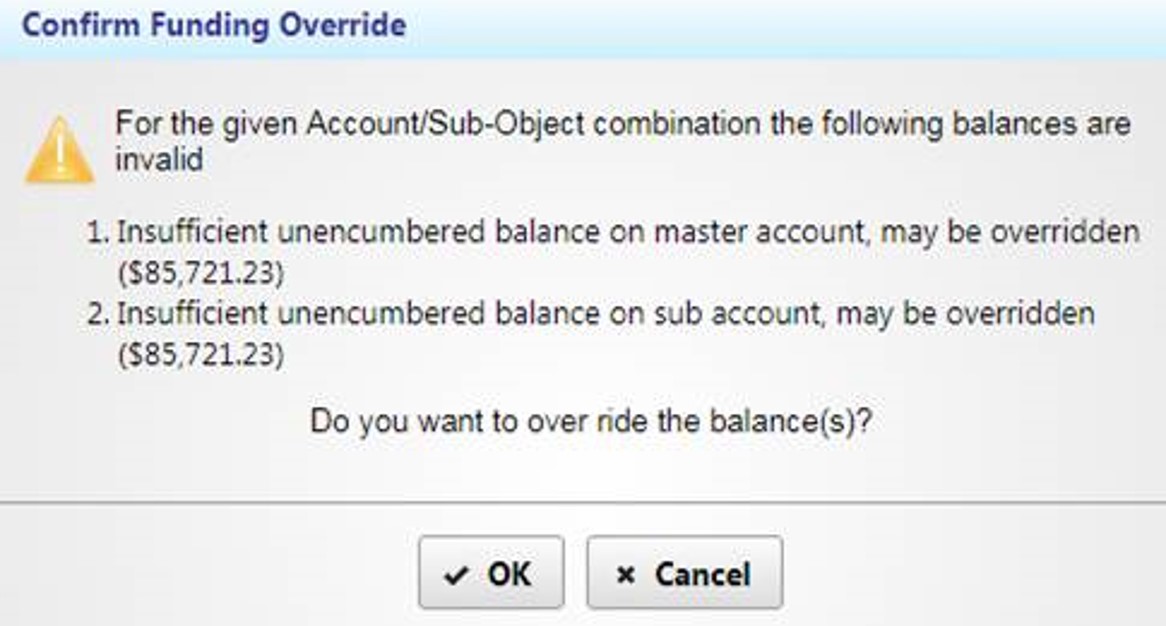
What you should do instead:
- Do not proceed with the override prompt.
- Take a screenshot of the message, if possible.
- Include the account number you were trying to use.
- Email the P-Card Administrator directly with this information and request assistance.
The P-Card Administrator will then seek assistance within the Business Office to confirm whether the override is appropriate for your transaction.
Important Note:
This message may appear more frequently as we approach the end of the fiscal year.
Digital P-Card Packet Submission Instructions
Preparing a Digital P-Card Packet
- Ensure files are legible and clear for auditing purposes.
- Confirm all documents are oriented correctly (right-side up).
- Scan both sides of any two-sided documents and remove blank pages.
- Log and certification sheets must have original signatures (see Signature Types for further guidance) before scanning.
- Save files using the following naming convention:
[year (YYYY).packet month (MM) – Last name.First name]- Example: August 2024 packet for Casey Avery →
2024.08 – Avery.Casey
- Example: August 2024 packet for Casey Avery →
Additional Information:
Dropbox Instructions
PC
- Map P-Card Dropbox to your computer
- Mapping instructions: File Explorer / This PC (left navigation list) / Computer tab
- Click Map Network Drive
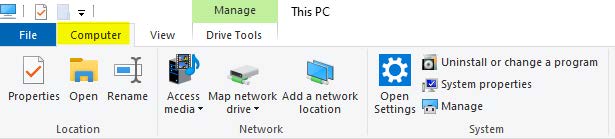
- Choose any drive available from list
- Folder – type: \\shares\p-card
- Click Finish
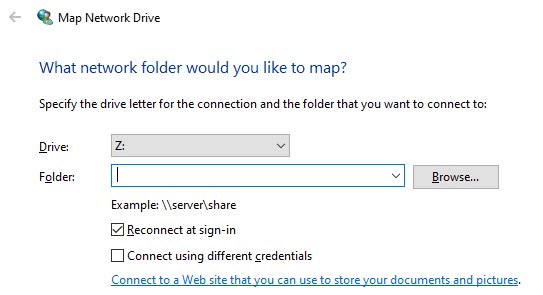
- Click Map Network Drive
- Mapping instructions: File Explorer / This PC (left navigation list) / Computer tab
- Once mapped, create a shortcut to your desktop for easy access.
- IMPORTANT: You will NOT be able to open this folder.
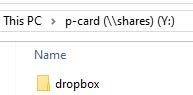

- IMPORTANT: You will NOT be able to open this folder.
- Saving your Digital Packet
- Scan and email the packet to yourself (this creates a PDF file)
- Save file using the following format:
Statement Month (3-letter abbreviation).Year (YY)-Full Name (as on statement)-[Bank]JPMC-Statement Total- Example: December 2025 packet for Jane Doe for $625.72
File Name: Dec.25-Jane Doe-JPMC-625.72
- Example: December 2025 packet for Jane Doe for $625.72
- Drag & drop PDF packet file into “dropbox” folder (again, you will not be able to click and open this folder or remove anything once submitted).
Important Retention Note: The Purchasing & Accounts Payable Office maintains the official records electronically, so you may dispose of your purchase documents whenever you feel comfortable. If you prefer to keep them for a few months for quick reference, that’s perfectly fine; however, please note that all POs (along with any related attached documents) and p-card packets are filed in OnBase.
Mac
- Click on the desktop or a finder window.
- Press the command key (⌘) and “k" simultaneously, or select "Go" in the menu bar
- Select "Connect to server"
- Type smb://shares/p-card into the empty field and select Connect
- In the “Connect to server" window, press '+' (lower left), this will make the path a Favorite.
- Once connected to the folder, click on "p-card" (top of finder window) and drag the icon over to your sidebar or down onto your dock (next to the trash) for even quicker access.
- Saving Your Digital Packet
- Scan and email the packet to yourself (this creates a PDF file)
- Save file using the following format:
- Statement Month (3-letter abbreviation).Year (YY)-Full Name (as on statement)-[Bank]JPMC-Statement Total
Example: December 2025 packet for Jane Doe for $625.72
File Name: Dec.25-Jane Doe-JPMC-625.72
- Statement Month (3-letter abbreviation).Year (YY)-Full Name (as on statement)-[Bank]JPMC-Statement Total
- Drag & drop PDF packet file into “dropbox” folder (again, you will not be able to click and open this folder or remove anything once submitted).
Important Retention Note: The Purchasing & Accounts Payable Office maintains the official records electronically, so you may dispose of your purchase documents whenever you feel comfortable. If you prefer to keep them for a few months for quick reference, that’s perfectly fine; however, please note that all POs (along with any related attached documents) and p-card packets are filed in OnBase.