02/10/2026
Watching a religious parade led by an ornately harnessed elephant in sun-drenched Sri Lanka over their winter break was just one highlight of two weeks of adventure for 12 college students specializing in communication disorders and sciences and their SUNY Cortland mentors.
The new two-week study abroad course they took, “A Clinical and Cultural Experience in Sri Lanka,” appears to be among only a few international clinical experiences offered by American colleges and universities in the discipline, as the program’s time demands on students tend to crowd out study abroad opportunities.
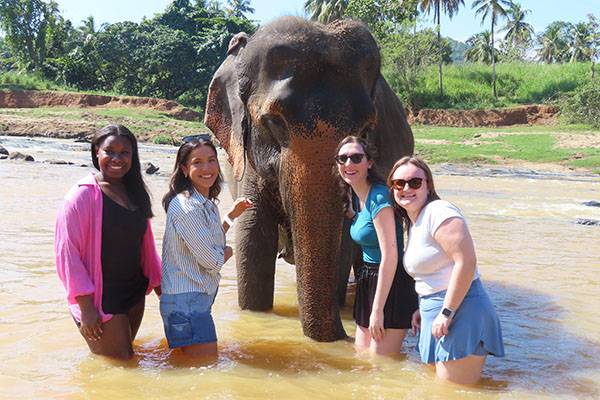
So, it was a rare treat for the eight graduate students and four undergraduates, 11 from SUNY Cortland and one University at Buffalo participant. They spent several days observing solemn Buddhist temple ceremony and visiting a baby elephant orphanage, a sea turtle rehab clinic, verdant formal gardens and the sunny seaside in January near the city of Kandy on this Indian Ocean island nation poised off the southern-most tip of India.
It wasn’t all play and no work, though. While there, the communication disorders and sciences students also raised $2,000 from among friends and family back home to help a tiny rural clinic serving children with autism that was severely flood damaged by a recent typhoon. The future clinicians and educators also left behind therapeutic toys they had purposely brought along on the trip.
The group led by two SUNY Cortland Communication Disorders and Sciences Department faculty members spent seven days working closely from 7 a.m. to 5 p.m. with their south Asian counterparts in the busy Ayati National Centre for Children with Disabilities. They engaged in the novel experience of trying out their professional skills in an under-resourced, multicultural environment where much was done very differently than in the U.S.
Organizer and Sri Lanka native Nimisha Muttiah, an associate professor, applied her knowledge of working with children with severe communication barriers. Her departmental colleague on the trip was Rachel King ’15, M ’17, a SUNY Cortland lecturer in communication disorders and sciences whose focus is on children with dysphagia, or severe swallowing disorders.
“I primarily work with children who have very significant communication difficulties, who use other means of communication,” Muttiah said. “One of the clinics that we ran there was for cortical visual impairment, called CVI, that’s specifically something that’s seen in children who have cerebral palsy. And then we were also using augmentative and alternative communication, called AAC, with those children along with taking into consideration their challenges.”
Briar Lennon, a SUNY Cortland graduate student from Cortland, N.Y., relished working with this special population.
“For example, they may have a hard time seeing certain colors,” Lennon said of the CVI clients. “So, they can see that color on the left side of their visual field, but not on the right side. That can affect my speech because, if I’m only seeing things on my left side, then I have that preference.”
Explaining to parents how a visual problem affects speech is a role Lennon is adopting.
“We learned how to use different colors and lights to stimulate their vision,” added Leigha Gould, a SUNY Cortland graduate student from Rochester, N.Y., about her encounters with clients with CVI.
“The goal of this treatment was to develop their vision so they would be able to use a communication board, called an augmentative and alternative communication (AAC) device,” Gould said.
To see children with severe swallowing disorders was unique for this American student group and, in turn, learning American therapeutic approaches was appreciated by the Sri Lanka clinical community. King gave a talk on speech sound disorders attended virtually and in person by about 100 current and future clinicians.
“I was helping them to differentiate different types of speech sound disorders that they may see and also how to select intervention approaches that were appropriate based on the diagnosis that they found,” King said. “It was very hands on and interactive.”
SUNY Cortland student Alexa Zuniga ’24, a SUNY Cortland graduate student from Baldwin, N.Y., considered her own prior experience working with pediatric feeding and swallowing clientele in the U.S.
“So, it was especially interesting to observe both the similarities and differences in foods, feeding practices and cultural norms in Sri Lanka,” Zuniga said.
“While many of my treatment approaches remained consistent — such as positioning strategies to reduce symptoms of true dysphagia and desensitization techniques to address oral aversions — I had to carefully consider cultural norms related to how children are typically fed and which foods are commonly consumed,” she said.
“In some cases, this meant recognizing that certain standard recommendations may not be realistic or culturally responsive and adjusting my approach accordingly.”
“None of the students who went on the study abroad trip had ever seen a child with cerebral palsy before,” Muttiah said. “So, they really got to see clinical populations that they’ve never worked with before nor had seen before. I think that was special.”
Very different cultural expectations alter the pattern in what client populations look like in the U.S., Muttiah explained.
“Sri Lanka has a universal healthcare system, but the numbers in the clinic that we were at were huge, like I think 14,000 to 15,000 registered children, but with only four or five full-time speech and language therapists on staff,” she said.
So, instead of visiting the clinic every week or so as in the U.S., some Sri Lankan children might be treated as seldom as once a year.
“So, there’s a lot of parent training that takes place,” Muttiah said. “For the students, that was unique seeing how involved the parents were. For many of the sessions, it wasn't just mom, it was mom and dad both, and they were actively participating, learning what they needed to do for their child.”
Families also must deal with stigma due to their Buddhist tradition.
“Maybe in a previous life you had done something wrong and so your child having a disability is kind of your burden to bear because of karma,” King said. “And so certainly there’s a stigma and helping the parents through that is another aspect of counseling.”
Sri Lankans speak Sinhala and Tamil, but roughly 50% of them also speak English. Muttiah was ready to step in and translate, so the language barriers weren’t a problem to King and the American students.
“I was worried when I go into the field, what is that going to look like when I get a client who speaks in a language that I don’t know?” Lennon said. “So, being able to have a translator there and work with them, I was like, ‘I could do this. This is great.’”
This was the first trip to Asia by all the students. For some, it was the first time they traveled internationally, Muttiah said.
“It was a big learning curve for some,” she said. “They had never been on a 14-hour flight before. It was a lot for some of them, but they were adaptable, they did well.”
This was the pilot offering for the new course. When it is offered again, it’s hoped that more students from outside SUNY Cortland will sign up for the rare opportunity, Muttiah said.
“We initially had aimed for 10 participants and we ended up with 12, which was excellent,” said Muttiah, who worked with her department chair, Associate Professor Deborah Sharp, and the university's International Programs office, to set up the study abroad offering and whose family helped with many logistical aspects of the itinerary. “So now we’re just putting out the word to see what interest there will be for a second trip in 2027.”
Select an image to begin a slide show
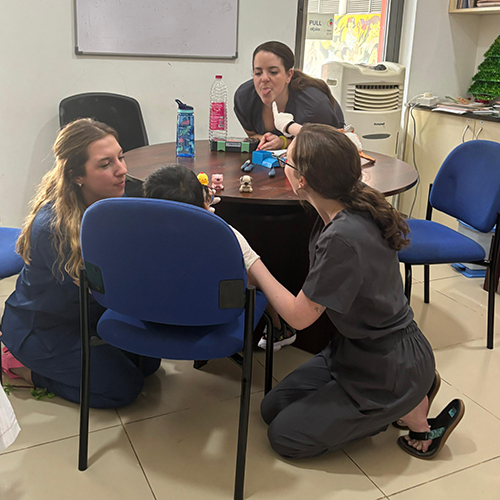
A feeding clinic with Rachel King looking on
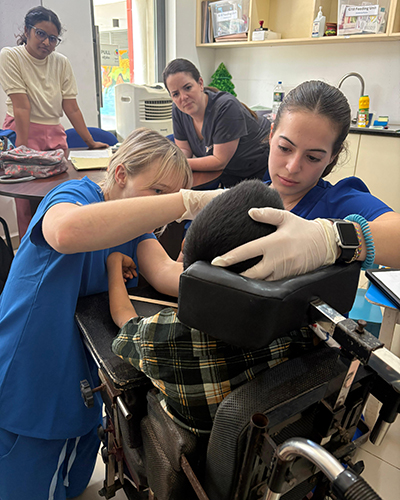
Helping a client swallow as Rachel King looks on
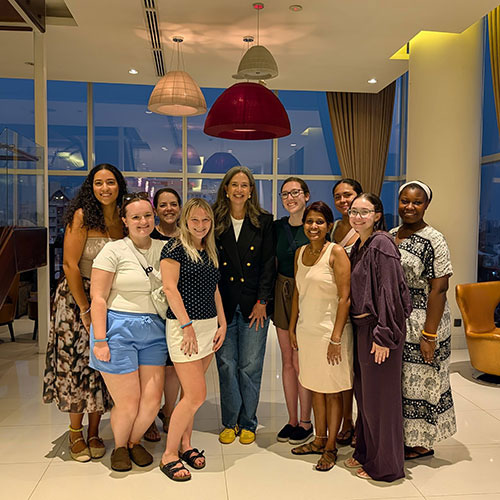
Meeting Sri Lanka's U.S. ambassador ...
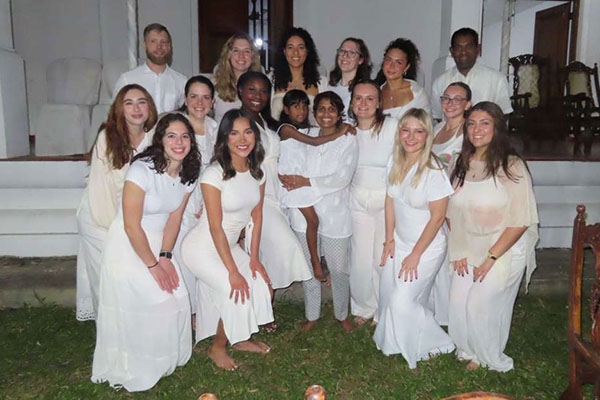
Students bought or brought white to take part in a Buddhist temple ceremony
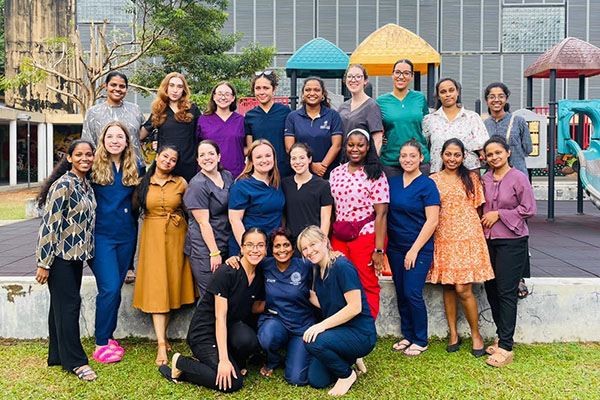
The SUNY students gather with their Ayati therapy mentors
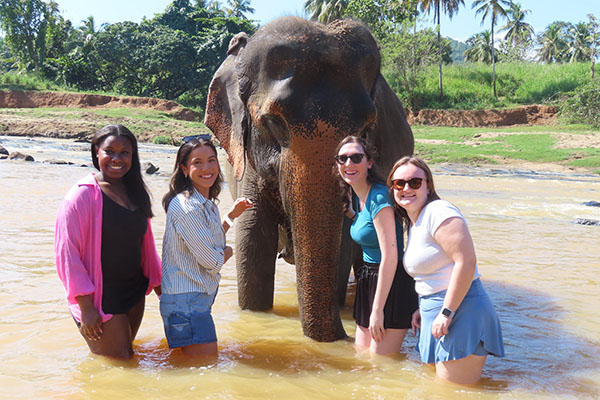
Washing a juvenile orphan elephant