Highlights
- Not sure if your project “counts” as SoTL? Start with a quick gut check and a few short, foundational reads to sharpen your question.
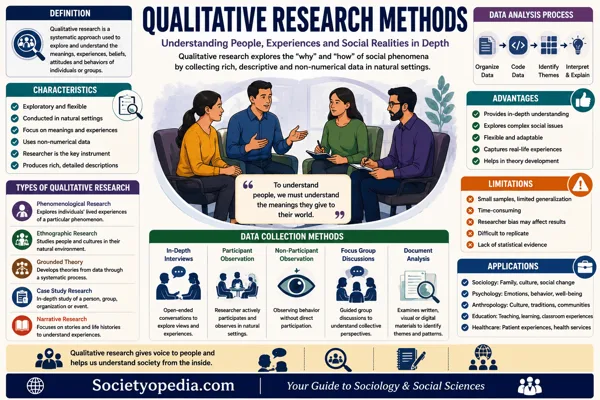
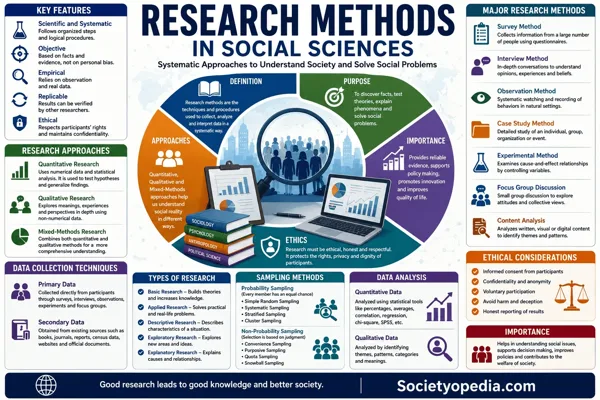
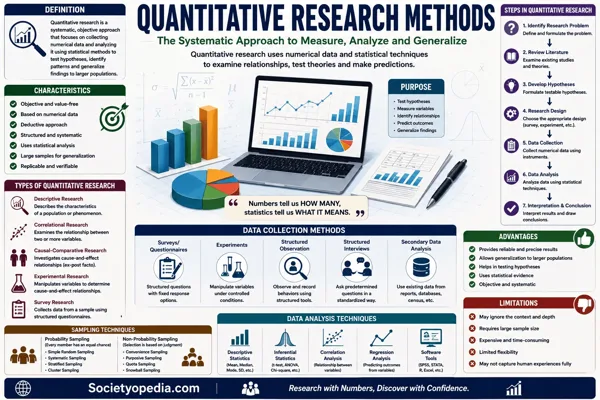
- Find the right method for your question with visual primers on qualitative, quantitative, and mixed methods research.
- Get IRB-ready with Cortland’s templates and SoTL-specific tips on consent, power dynamics, and using student work.
- You don’t have to go it alone: connect with the CTL, IRB, library, and other campus partners at every stage.
Ever tried something new in your course and wondered, “Did that actually help my students learn?” That question is the seed of the Scholarship of Teaching and Learning (SoTL): systematic, shareable inquiry into teaching and learning in your own classroom. Here’s how to move from a hunch to a study in six steps, with readings and campus partners for each one.
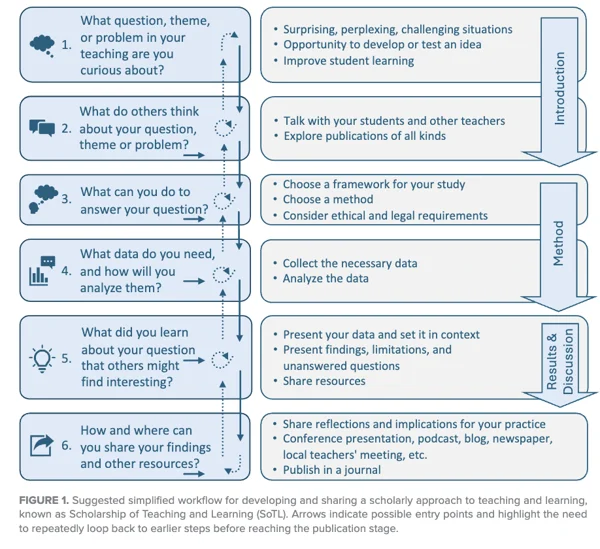
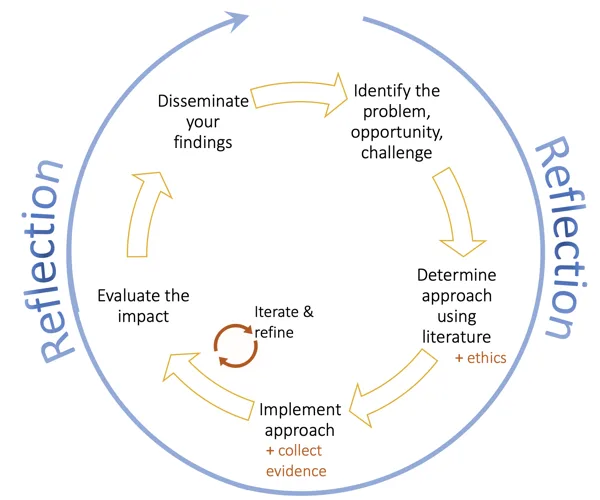
Want the whole journey on one page? Developing a scholarly approach and contributing to conversations about teaching and learning (opens in new tab) (Glessmer et al., 2025) maps a simplified SoTL workflow, and a reassuring reminder that looping back to earlier steps is part of the process.
Step 1: Start with a question
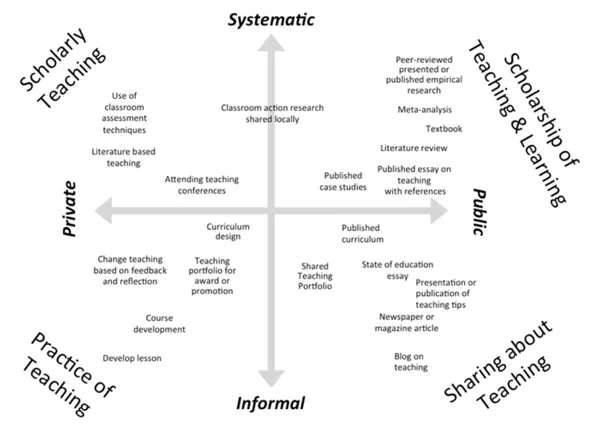
Write down the question about student learning you’re curious about. Surprising, puzzling, or frustrating moments in your teaching are great places to look. A good rule of thumb: if you are asking a question about learning in your own context, gathering evidence to answer it, and planning to share what you find with others, you are probably doing SoTL.
- Not sure where your project falls? Trisha Poole’s short post, How do I know if I’m doing research or SoTL? (opens in new tab), walks through the distinction.
- Want the big picture? Kern et al. (2015) (opens in new tab) trace how SoTL grew out of Boyer’s Scholarship Reconsidered and where it fits in the academy today.
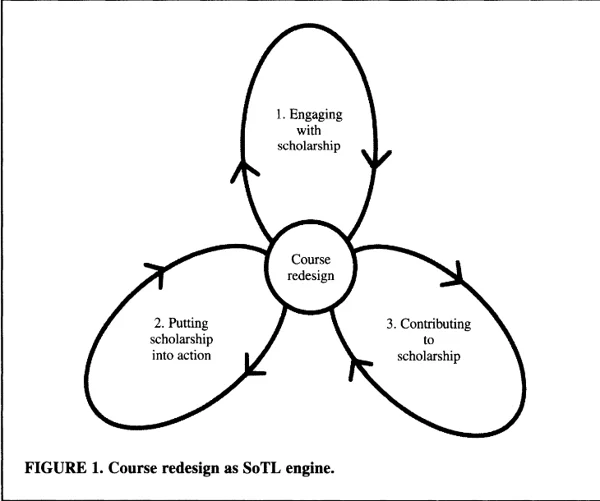
- Already redesigning a course? The scholarship of teaching and learning paradox (opens in new tab) (Walker et al., 2008) shows how a course redesign you’re already planning can double as a SoTL project.
Step 2: See what others have learned
Skim one or two foundational readings to sharpen your question and see how others have approached similar ones. Most of these are about a 15–20 minute read.
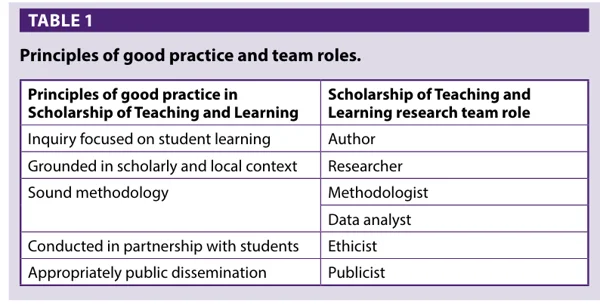
- Principles of good practice in SoTL (opens in new tab) (Felten, 2013): five principles to check your project against, from inquiry focused on student learning to partnering with students.
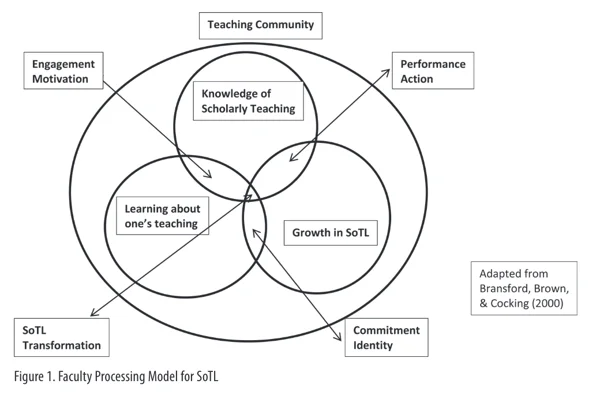
- Faculty learning processes (opens in new tab) (Gayle et al., 2013): a model of how faculty move from scholarly teaching to SoTL.
- The transformative potential of the scholarship of teaching (opens in new tab) (Kreber, 2013): why SoTL can change how we think about our teaching, not just what we do.
- Evidence of the impact of SoTL purposes (opens in new tab) (Trigwell, 2013): what the research says about whether SoTL actually improves student learning.
Who can help
Library Consultations
Research librarians can help you find SoTL literature in your discipline and track down articles through Interlibrary Loan.
Ask a Librarian
Chat live with a reference librarian anytime, day or night. Cortland librarians staff the chat during Research Help hours; backup librarians from other colleges monitor it the rest of the time.
Step 3: Find your people
SoTL is better with company. A colleague, a student partner, or a small team can bring skills you don’t have yet and keep the project moving.
- Getting started in SoTL research: Working as a team (opens in new tab) (Faulconer, 2021): matches each principle of good SoTL practice to a team role, so you can see what a collaborator might bring.
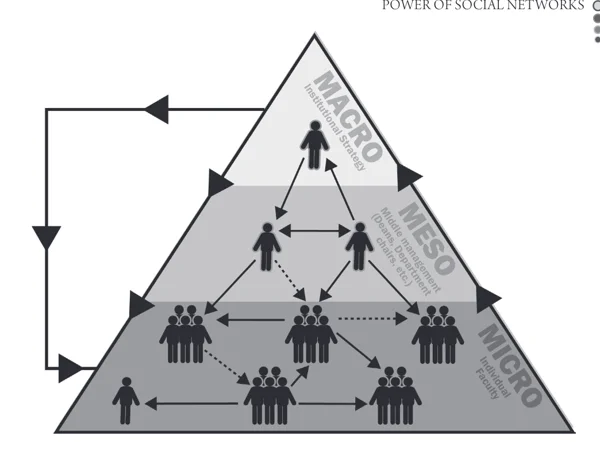
- The power of social networks (opens in new tab) (Williams et al., 2013): how SoTL spreads through conversations among faculty, chairs, and campus leaders.
Who can help
CTL Consultations
Talk through a project idea, research question, or study design with a CTL team member.
SoTL Writing Accountability Group
Protected writing time and gentle accountability alongside colleagues working on their own SoTL projects.
Research and Sponsored Programs
Find and apply for internal and external funding to support your SoTL project.
Step 4: Pick methods that fit your question
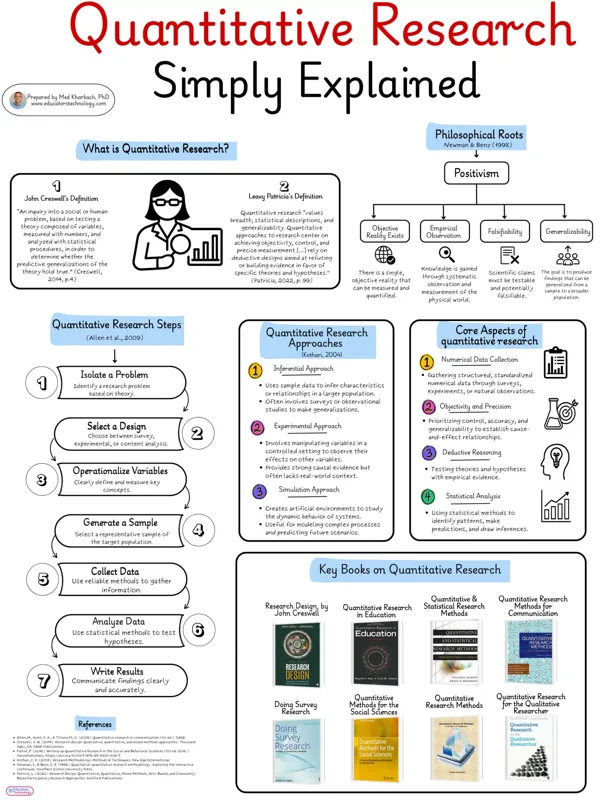
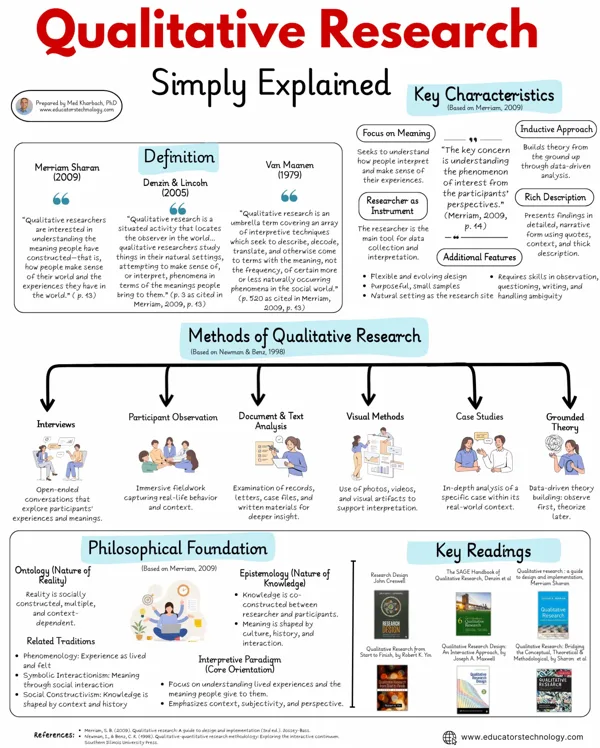
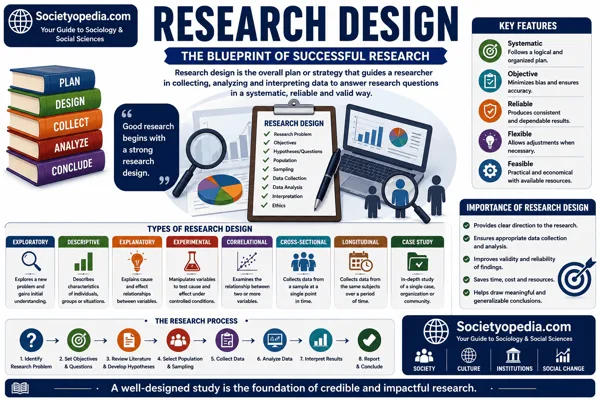
Start with your question, then choose a method (or two) that can actually answer it. These quick primers include visual overviews that are handy to keep open while you plan.
Designing your study
- Research design in social science research (opens in new tab) and Research methods in social sciences (opens in new tab) (Societyopedia, 2026d, 2026b): overviews of the main design types and approaches.
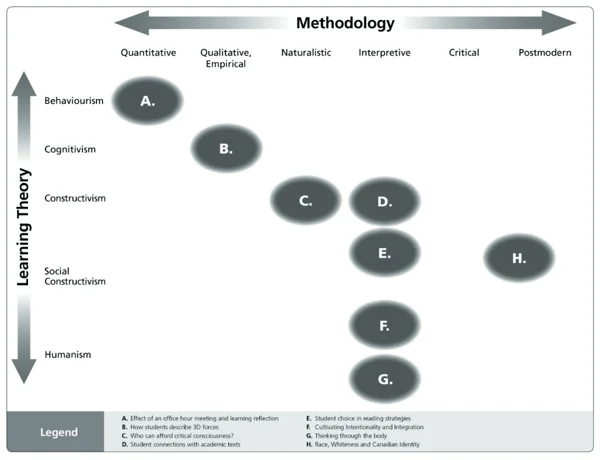
- Conceptualizing and communicating SoTL (opens in new tab) (Miller-Young & Yeo, 2015): a framework that maps SoTL studies by methodology and learning theory, with real examples of each.
Qualitative approaches
Good for “how” and “why” questions: student reflections, interviews, focus groups, open-ended survey responses.
- Qualitative research simply explained (opens in new tab) (Kharbach, 2025)
- Qualitative research methods (opens in new tab) (Societyopedia, 2026a)
Quantitative approaches
Good for “how much” and “did it change” questions: pre/post assessments, grade comparisons, Likert-scale surveys.
- What is quantitative research according to authors? (opens in new tab) (Kharbach, 2023a)
- Quantitative research methods (opens in new tab) (Societyopedia, 2026c)
Mixed methods
Many SoTL projects combine both: a survey that shows what changed, plus reflections that show why.
- Mixed methods research definition and examples (opens in new tab) (Kharbach, 2023b)
Who can help
CTL Consultations
Not sure which method fits? Bring your question to a CTL team member and talk through your study design.
Institutional Research and Assessment
May be able to help with institutional data (such as course-level trends) and survey tools.
Step 5: Get IRB-ready
Because SoTL usually involves your own students, most projects that you plan to share or publish need a conversation with the Institutional Review Board (IRB) before you collect data. The IRB decides whether your project needs review and at what level, so check in even if you think your study is low-risk or exempt.
A few SoTL-specific things to think through as you plan:
- Consent and power: Students may feel pressure to participate when their instructor is the researcher. Consider having a colleague handle consent, or keeping participation anonymous until grades are submitted.
- Existing coursework: If you want to analyze assignments, grades, or discussion posts, ask the IRB how to do that ethically, ideally before the semester starts.
- Timing: Build in time for review so it doesn’t squeeze your data collection window.
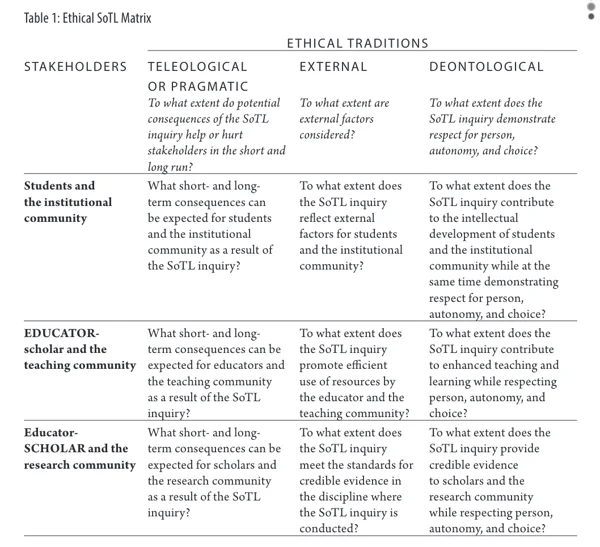
For a deeper look, Being ethically minded (opens in new tab) (Healey et al., 2013) offers a matrix of questions to weigh how your project affects students, colleagues, and the research community.
Who can help
Institutional Review Board (IRB)
Reviews research involving human participants and can answer questions about consent, exemptions, and using student work. Templates, FAQs, and help files make the process easier.
Step 6: Share what you learned
SoTL becomes scholarship when it goes public. Sharing can be as informal as a department meeting or a CTL event, or as formal as a conference presentation or journal article. Plan where and how you’ll share early, since it can shape what data you collect.
Who can help
SoTL Writing Accountability Group
Turn your findings into a draft alongside colleagues doing the same.
Library Consultations
Research librarians can help you identify journals and other venues for sharing your work.
Citations & Further Reading
-
Faulconer, E. (2021). Getting started in SoTL research: Working as a team. Journal of College Science Teaching, 50(6), 3–5. https://www.jstor.org/stable/27133124 [Cortland Access]
-
Felten, P. (2013). Principles of good practice in SoTL. Teaching & Learning Inquiry: The ISSOTL Journal, 1(1), 121–125. https://doi.org/10.2979/teachlearninqu.1.1.121 [Cortland Access]
-
Gayle, B. M., Randall, N., Langley, L., & Preiss, R. (2013). Faculty learning processes: A model for moving from scholarly teaching to the scholarship of teaching and learning. Teaching & Learning Inquiry: The ISSOTL Journal, 1(1), 81–93. https://doi.org/10.2979/teachlearninqu.1.1.81 [Cortland Access]
-
Glessmer, M. S., Daae, K., Førland, O., & Kordts, R. (2025). Developing a scholarly approach and contributing to conversations about teaching and learning. Oceanography, 38(4), 56–62. https://www.jstor.org/stable/27433212 [Cortland Access]
-
Healey, R. L., Bass, T., Caulfield, J., Hoffman, A., McGinn, M. K., Miller-Young, J., & Haigh, M. (2013). Being ethically minded: Practising the scholarship of teaching and learning in an ethical manner. Teaching & Learning Inquiry: The ISSOTL Journal, 1(2), 23–32. https://doi.org/10.2979/teachlearninqu.1.2.23 [Cortland Access]
-
Kern, B., Mettetal, G., Dixson, M., & Morgan, R. K. (2015). The role of SoTL in the academy: Upon the 25th anniversary of Boyer’s Scholarship Reconsidered. Journal of the Scholarship of Teaching and Learning, 15(3), 1–14. https://doi.org/10.14434/josotl.v15i3.13623 [Open Access]
-
Kharbach, M. (2023a, May 9). What is quantitative research according to authors? Selected Reads. https://www.selectedreads.com/what-is-quantitative-research-according-to-authors/ [Open Access]
-
Kharbach, M. (2023b, June 25). Mixed methods research definition and examples. Selected Reads. https://www.selectedreads.com/mixed-methods-definition-and-examples/ [Open Access]
-
Kharbach, M. (2025, May 25). Qualitative research simply explained. Educators Technology. https://www.educatorstechnology.com/2025/05/qualitative-research.html [Open Access]
-
Kreber, C. (2013). The transformative potential of the scholarship of teaching. Teaching & Learning Inquiry: The ISSOTL Journal, 1(1), 5–18. https://doi.org/10.2979/teachlearninqu.1.1.5 [Cortland Access]
-
Miller-Young, J., & Yeo, M. (2015). Conceptualizing and communicating SoTL: A framework for the field. Teaching & Learning Inquiry: The ISSOTL Journal, 3(2), 37–53. https://doi.org/10.2979/teachlearninqu.3.2.37 [Cortland Access]
-
Poole, T. (2019, October 29). How do I know if I’m doing research or SoTL? https://www.trishapoole.info/news/2019/10/29/research-vs-sotl [Open Access]
-
Societyopedia. (2026a, July 4). Qualitative research methods: Definition, characteristics, types, data collection techniques, advantages and limitations. https://societyopedia.com/qualitative-research-methods/ [Open Access]
-
Societyopedia. (2026b, July 4). Research methods in social sciences: Definition, types, approaches, techniques and importance. https://societyopedia.com/research-methods-in-social-sciences/ [Open Access]
-
Societyopedia. (2026c, July 7). Quantitative research methods: Definition, characteristics and types. https://societyopedia.com/quantitative-research-method/ [Open Access]
-
Societyopedia. (2026d, July 8). Research design in social science research: Definition and types. https://societyopedia.com/research-design-in-social-science-research/ [Open Access]
-
Trigwell, K. (2013). Evidence of the impact of scholarship of teaching and learning purposes. Teaching & Learning Inquiry: The ISSOTL Journal, 1(1), 95–105. https://doi.org/10.2979/teachlearninqu.1.1.95 [Cortland Access]
-
Walker, J. D., Baepler, P., & Cohen, B. (2008). The scholarship of teaching and learning paradox: Results without rewards. College Teaching, 56(3), 183–189. https://www.jstor.org/stable/20695205 [Cortland Access]
-
Williams, A. L., Verwoord, R., Beery, T. A., Dalton, H., McKinnon, J., Strickland, K., Pace, J., & Poole, G. (2013). The power of social networks: A model for weaving the scholarship of teaching and learning into institutional culture. Teaching & Learning Inquiry: The ISSOTL Journal, 1(2), 49–62. https://doi.org/10.2979/teachlearninqu.1.2.49 [Cortland Access]