03/11/2026
Spring Semester Sophia’s Garden Training
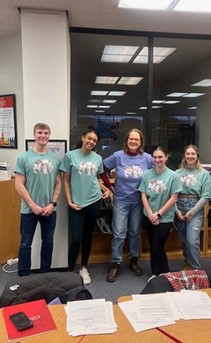
Dr. Mecke Nagel, founder of Sophia’s Garden, along with Dr. Lin Lin and Lisa the Librarian, who both serve as Sophia’s Garden Institute board members, and the Sophia’s Garden teaching assistants, lead annual spring training for Sophia’s Garden. This training emphasizes the importance of selecting diverse and inclusive books that can be intentionally integrated into classroom instruction to help future educators. The teaching assistants share their experiences working with Sophia’s Garden to help guide and support new participants. The goal of the training is to prepare educators to create culturally responsive learning experiences that allow students to see themselves represented in literature while also learning about perspectives different from their own. Through discussions, book exploration, and collaborative planning, participants learn how to use literature to promote a feeling of empathy, inclusion, and fruitful classroom conversations.
This training supports future educators in fostering safe and respectful learning environments where all students feel valued and safe to share their voice!
Guide to successful practice of Sophias Garden:
Your Role:
Guide! "Remember to be a facilitator and not a participant in the discussion." (Page 59) Create that space for children to feel that they can dive deep and explore ideas! (There is never a wrong answer!) *This is also keeping an open mind to any idea that is appropriate to the conversation. You want the children to have their own opinion and thoughts! Presence The children can feel when you're enthusiastic. Children are big on reading the energy in the room. Be intentional on how you read. This will influence the groups wanting to add to the conversation.
Intentional Discussion!
Follow the Child's lead regarding "big ideas" questions... "Everyone should be an active participant in our discussions so we don't want attention problems or comprehension difficulties to stymie anyone." (p 42) Make those personal connections when creating thoughtful questions. "Give an example from their own experience." Example: what do you like and dislike about the picture? You want the questions to lead to further discussion.
There should not just be one answer! One good technique that I thought was a great way to start a philosophical conversation is the "go-round" method. "The go-round proceeds when you ask an easy question that each student will be able to answer." (p.50) This method is breaking the ice and allowing a feeling of comfort to speak and share.
Before going in, make a game plan!
Before reading questions, During reading and, Reflection
After reading reflect!
Reflections and Growth. Note in your mind while you're leading what worked and what didn't. Then log what you can do next time that works and what you would change.
Questions: How can we as leaders/facilitators create those questions that invite conversation?
How can we make a feeling of comfort when leading a discussion?
Citation:
Wartenberg, T. E. (2009). Big ideas for little kids: Teaching philosophy through children’s literature. Rowman & Littlefield Education.