04/06/2026
In recognition of Earth Day, SUNY Cortland’s Green Reps authored articles highlighting sustainability initiatives and practices across campus, New York State and the world.
Why I became a Green Rep
By Kelsey Thornton
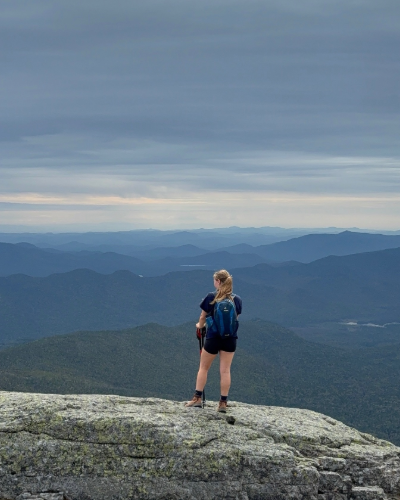
When I was six months old, my parents took me on my first camping trip. When I was five years old, I hiked my first mountain in the Adirondacks. When I was just about six years old, I found out about the devastation of climate change and what it was doing to our Earth.
It was the first summer I could remember where it reached 90 degrees. Now if anyone knows Buffalo, you know it definitely should not be getting to 90 degrees. I asked my parents why it was so hot. I distinctly remember my dad telling me that temperatures were going to keep going up. I did not truly understand at the time, but I knew that it was bad. I was mad at it for taking away my cool summer nights.
In years later I learned more and more about rising temperatures and climate change and how detrimental it is. One summer, while my parents would attempt to drag me inside for dinner on a July summer night, I remember telling them, “I have to appreciate it now while it's still here”. Now my twelve-year-old mind was a little dramatic and lacked a sense of time, even then I understood the gravity of climate change. So then and there at twelve years old I decided that I wanted to do what I could, even something small, to help protect nature to sustain the Earth.
Now a little later in my life, I found a passion making small sustainable practices in my life like limiting single use plastics, turning the water and lights off when I can, and reusing whenever I can. These changes are not huge alterations in my life but are enough to limit my footprint. Once I came to SUNY Cortland, I found out how campuses have specific initiatives that address sustainability and how to improve it. As college campuses have mass living residencies, food services, and must run entire communities, I found it so interesting how some schools have specific teams of students and staff that attempt to improve those resources to be more sustainable. Once I found the Green Rep job posting, I was sold.
Throughout my time at SUNY Cortland, I have always felt a passion for doing my part to keep our campus green. As an avid hiker and someone who simply truly enjoys being outside whenever I can, I found an amazing place for me on campus as a Green Rep! I chose to become a Green Rep because I wanted to make an impact on the campus. Something that transcended events or just ideas but actually enacting these ideas onto the campus to make it more sustainable. As a Green Rep I have had the best time with the opportunity to work with students and staff to tackle the challenges of sustainability on campus and making SUNY Cortland greener.
Photo credits: Kelsey Thornton
Climate Change in New York State
By Linda Märkl
We have known that the global climate is warming for more than three decades, still the efforts to stop this trend were – and still are - shockingly inadequate. At this point, climate change is no longer a distant threat we might avoid with last-minute enthusiasm. Thanks to years of collective procrastination, some level of global warming is now inevitable, leaving us with uncertain, unpredictable consequences.
Usually, we focus on dramatic and distant disasters like melting icebergs, rising sea levels, and loss of biodiversity. Comforting in a way, because the polar bears on shrinking ice sheets seem so far away. But let’s zoom in to a region much closer to home: The Adirondack Park. Located in Upstate New York, the Adirondacks are the largest publicly protected area in the contiguous United States – larger than Yellowstone, Yosemite, Grand Canyon and Glacier National Parks combined! This region – like so many others - will be a stage for the consequences of climate change.
Unfortunately, the effects are already becoming visible. Winters are getting shorter and milder, which might sound delightful… unless you happen to be one of the ecosystems that depends on long, cold seasons. Snowpack is shrinking, and places like Lake Placid are projected to only have nine to fifteen days below 0°F per year by the middle of this century. Great news if you hate the cold – slightly less fantastic for local communities that depend on winter tourism.
Meanwhile, the number of extremely hot days is expected to increase. Warmer temperatures lead to concerning spread of harmful algae and invasive aquatic species. These changing conditions also threaten wildlife that depend on the few cool mountaintops they have left, such as Bicknell’s Thrush, a North American songbird. These species don’t have a back-up habitat, just like we don’t have a back-up planet. As if that wasn’t enough already, extreme precipitation is becoming more common. That means heavier rainfalls, higher flood risks along river valleys, and lakes literally turning brown due to runoff. What used to be considered rare events will become surprisingly regular.
But why is this region particularly sensitive to rising temperatures? One reason is its northern latitude and high elevation. The Adirondack Park lies in a fragile ecological transition zone with both boreal and hardwood forests. Areas such as these are especially sensitive to rising temperatures, meaning they experience the effects of global warming earlier and more intensely. Trends such as losing specialized high-elevation or cold-water habitats, threaten the local biodiversity. In many ways, you can think of this as a preview of what is coming next.
Of course, efforts are being made. New York has introduced climate policies aimed at reducing emissions and promoting renewable energy. But while these initiatives are important, they feel like fighting a forest fire with only one water bucket – still kind of helpful, but far from sufficient.
In the end, the Adirondacks are more than just a beautiful landscape; they are a warning sign. Climate change is happening right on our doorstep, and it’s not an isolated problem. The question is no longer whether change is happening but how much we as individuals and a community are willing to do about it. And if the past three decades are any indication, we might want to start doing a little more – and maybe a little faster.
Photo credit: Linda Märkl
References:
Adirondack Explorer. (2026, March 5). Climate change in the Adirondacks the path to sustainability. https://www.adirondackexplorer.org/general/climate-change-in-the-adirondacks-the-path-to-sustainability/
New York State Climate Impacts Assessment. (2025, November 14). Climate impact spotlight: The Adirondack region. https://nysclimateimpacts.org/explore-by-region/the-adirondack-region/
Stager, J.C. (2025). Climate Change in the Adirondacks as of 2024.
Adirondack Watershed Institute Climate Reports, No. 1, Paul Smith’s College. https://www.paulsmiths.edu/wp-content/uploads/2025/03/REPORTNo.1ADIRONDACKCLIMATE2024.pdf
Shower water usage
By Tiana Schelble
Many students assume because they aren’t paying for the energy and water bill that it doesn’t matter how much they use. What they fail to understand is that they are paying in other ways.
The world is not an unlimited resource. It may seem like whatever we do to it will not have huge effects, however that is a false reality. A typical shower in the United States lasts 8.2 minutes and uses 17.2 gallons. That means that your one shower uses the same amount of water that 21 people need to drink a day to be healthy.
Something to consider as well is that over 95% of the Earth’s water is not usable for human consumption, meaning that it must be filtered and treated to be used, which contributes even further to energy use and pollution. The carbon emissions used for energy to heat your water primarily come from burning fossil fuels, which are a finite resource. Once we run out, it will take millions of years for the earth to produce more. The use of fossil fuels release greenhouse gases which contributes to climate change. It also contributes to air pollution as burning fossil fuels releases harmful pollutants into the atmosphere.
Not to mention long showers dry up lakes and wetlands. Showers are necessary of course, but wasting water is not. You don’t need to have the water running for minutes to heat up or take showers for longer than 10 minutes. Most times students let the shower run to heat up and forget about it while doing other things. As a student I get the difficulty of the water not always being hot but changing the time you shower rather than running the water in hopes it warms up is a far better solution.
Photo source: Vecteezy
References:
Lundgren, J. (2025, July 17). How many gallons of water does a typical shower use? find out!. CRANACH. https://cranachhome.com/articles-bathroom/how-many-gallons-of-water-does-a-typical-shower-use/
U.S. Energy Information Administration. (2024, June 18). Energy and the environment explained. Where greenhouse gases come from - U.S. Energy Information Administration (EIA). https://www.eia.gov/energyexplained/energy-and-the-environment/where-greenhouse-gases-come-from.php
What's Really in Your Water Bottle?
Abhipsha Bhandari
Most of us grab a plastic water bottle without thinking twice. It is convenient, cheap, and everywhere on campus. But that one bottle costs a lot more than the dollar you paid for it.
Every year, the world produces over 500 billion plastic bottles and less than half get recycled (Earth Day Network, 2018). The rest end up in landfills, rivers, and oceans. Over time they break down into tiny particles called microplastics. These particles are so small you cannot see them, but they are everywhere. Scientists have now found microplastics in human blood, lungs, and even unborn babies (Leslie et al., 2022). We are basically drinking our own pollution.
What makes this worse is that plastic does not actually disappear. A single plastic bottle can take up to 450 years to fully break down (National Ocean Service, 2020). That means every plastic bottle ever made still exists in some form on this planet. When we think about the billions produced every single year, that number becomes almost impossible to wrap our head around.
This problem hits close to home, too. Local waterways like the Tioughnioga River, which runs right through Cortland, are at risk from plastic runoff from roads, parking lots, and surrounding areas. Once plastic gets into a river system, it is almost impossible to fully remove (SUNY Cortland Green Reps, 2024). It does not just affect the water. It affects the fish, the wildlife, and eventually the people who depend on those ecosystems.
The good news is that the fix is really simple. Switching to a reusable water bottle is one of the easiest habits we can build. SUNY Cortland already has refill stations all over campus, so there is no excuse not to make the swap. One bottle used every day for a year replaces hundreds of single-use plastics. That is a real impact from one small decision. We do not need a perfect solution. We just need people to make one small, consistent choice. Start with your water bottle.
Photo source: Pixabay
References:
Earth Day Network. (2018). Fact sheet: Single use plastics. https://www.earthday.org/fact-sheet-single-use-plastics
Leslie, M. et al. (2022). Discovery of microplastics in human blood. Environment International. https://www.sciencedirect.com/science/article/pii/S0160412022001258
National Ocean Service. (2020). How long does it take for plastic to decompose? https://oceanservice.noaa.gov/facts/plastic-pollution.html
SUNY Cortland Green Reps. (2024). Voices for sustainability. https://www2.cortland.edu/news/voices-for-sustainability-green-reps-share-their-passions
Something’s fishy with microplastics: An overview of biomagnification in aquatic trophic levels.
By Fiona Joss
Biomagnification is the increase in the concentration of toxic particulates in the tissues of organisms at each successive trophic level (Adler, 2023). Simply put, the higher up the food chain you go, the higher the concentration of toxins. This process is especially concerning in aquatic ecosystems, where microplastics have become a widespread and persistent pollutant.
When plastic breaks down, it doesn’t disappear; instead, it fragments into smaller pieces known as microplastics (Dutchen, 2023). While not every piece of plastic remains intact, plastic pollution persists in the environment in various forms. These tiny plastic particles often settle into benthic sediment layers in bodies of water. Organisms at the lowest trophic levels, such as zooplankton and some aquatic plants, can absorb or ingest these particles (NOAA, n.d).
These particulates accumulate within individual organisms, so when predators consume multiple contaminated prey, the level of contamination increases. As a result, these particles are transferred upward through trophic levels, causing higher-level consumers—including large fish, birds, and even humans—to be exposed to and accumulate higher concentrations of microplastics.
Part of the reason I became interested in sustainability is my love of water and aquatic organisms. When I learned about the process of biomagnification, it piqued my interest and resonated with me. It's a topic I find fascinating, and I believe it can help people better understand the issue with plastic waste. While research on the full effects of microplastics is still ongoing, their presence across the planet highlights a growing environmental concern. Biomagnification in aquatic systems demonstrates how small pollutants can lead to large-scale consequences, ultimately affecting entire ecosystems and posing a threat to human health.
References:
Alder, R. (2023). Biomagnification: Pharmacy and pharmacology: Research starters: EBSCO research. Biomagnification. https://www.ebsco.com/research-starters/pharmacy-and-pharmacology/biomagnification
Dutchen, S. (2025, November 13). Microplastics everywhere. Harvard Medicine Magazine. https://magazine.hms.harvard.edu/articles/microplastics-everywhere
National Oceanic and Atmospheric Administration. (n.d.). Northeast benthic invertebrates. Integrated Ecosystem Assessment. https://www.integratedecosystemassessment.noaa.gov/regions/northeast/northeast-benthic-invertebrates
The Importance of Otters in Marine Ecosystems
By Caden Riegger
Everyone can agree that otters are awesome, but what makes them so cool? They hold hands with one another, are remarkably playful and have a favorite rock they carry around with them their entire life, they are also one of the most important species in marine ecosystems, which is the reason they are considered a keystone species.
A keystone species describes a certain animal species which help hold their entire ecosystem together, playing a vital role in its structure and biodiversity. Without them, ecosystems would look very different or just flat-out collapse.
Otters are considered a keystone species because they’re a top predator in marine ecosystems. For example, by preying on sea urchins, who consume sea kelp on a massive scale, otters help keep sea urchin populations in check, which also helps the kelp population grow. Healthy kelp forests in turn support greater diversity in our marine ecosystems and also help decrease the amount of carbon in our oceans, which helps fight global warming. Otters have also been proven to help declining marine ecosystems across the United States and the world. When introduced into new ecosystems, otters helped kelp forest and seagrass beds have recovered at extraordinary speed due to their roles as predators.
However, some otter populations have been in decline for the past 20 years due to habitat loss and the wider struggle against global warming. Otters serve as a key example as to why it is so important to protect and conserve natural habitats and move toward a more sustainable future because without them, marine ecosystems would decline rapidly.
Photo source: Unsplash.com
References:
U.S. Fish and Wildlife Service. (2021, July 30). *The keystone species role of the sea otter*. https://www.fws.gov/sites/default/files/documents/The%20keystone%20species%20role%20of%20the%20sea%20otter%2007302021.pdf
Overconsumption and Social Media: When “Trends” Become Waste
By Christina Gelchie
Scrolling on TikTok or Instagram, it’s almost impossible to avoid large “haul” videos, trending products, and the constant push to buy more. From skincare routines with ten different products to fast fashion outfits worn once, social media has normalized overconsumption in a way that feels harmless, but has real environmental consequences.
These trends create a cycle where items quickly go from “must haves” to forgotten. Clothing ends up in landfills, beauty products are barely used, and packaging waste piles up. Many of these products are designed to be cheap and trendy rather than durable, which encourages people to keep buying instead of reusing what they already have.
Being a Green Rep has taught me just how real the issue of overconsumption is. Not just in general, but in my own daily habits. I’ve become more aware of how often I used to buy things simply because they were trending or convenient, without thinking about the long-term impact.
Now, I make a conscious effort to slow down and be more intentional with what I consume. That means educating myself on where products come from, choosing quality over quantity, and finding more sustainable options like thrifting or reusing what I already have. I’ve also started to actively push back against overconsumption by encouraging others to rethink their habits and by supporting more mindful trends like outfit repeating and “underconsumption.” Being aware of how social media shapes our choices has been a huge part of that shift. Trends may come and go, but making sustainable decisions is something I’ve learned to prioritize forever.
Photo credit: Christina Gelchie
Why Green Rep?
By Brianne Leak
I vaguely remember the first time I learned about recycling in second grade. I remember going home and telling my mom that we needed a recycling bin at home. Although I didn't know much about sustainability, I knew that we had a responsibility to the planet and that every action would help no matter how big or small. From that point on I kept the lessons I learned in mind.
However, the lesson I learned when I was younger was pretty vague. For a long time I thought that recycling was the most I could do to help. I became more curious and eager to help as I got older, when I was 12 years old I decided to go vegan. Even at that point the most I thought I had the power to do was eat plant-based and recycle which I still do both now, but I have learned so much more since then.
My job as a Green Rep has helped me learn and has helped me to think more sustainably. Being able to share all of the information I have learned with my peers has been so rewarding and exciting. There is so much power and possibility for change in sharing knowledge whether it be through programming, conversations or social media posts. It is amazing to be a part of the change and grow in sustainable thinking and practices.
Phantom Energy
By Elena Gonzalez
Energy conservation is one way a person can build more sustainable habits and help mitigate climate change. One aspect that is not talked about as often is vampire power or phantom energy. I believe it is something more people should be aware of because it’s easy to overlook but adds up over time. Phantom energy is when electricity continues to be used by appliances or electronics even when they are switched off or not actively in use.
The main reason for this is simple: they are still plugged in. When a device is left plugged in, like your computer, phone charger, or electric toothbrush, it continues to draw energy even though you are not using it. That leftover flow of electricity adds up over time. Depending on the type and size of the device, this wasted energy can range from about 0.5 to 40 watt-hours for every hour it stays plugged in. In places like dorm rooms or shared campus spaces, where multiple devices are plugged in at once, this kind of energy use can build up quickly without people realizing it.
Even though this is a common issue, there are some easy ways to cut down on wasted electricity:
- Unplug one device while using another. Instead of leaving multiple things plugged in all the time, try unplugging devices you’re not actively using. This helps stop unnecessary energy use in the background.
- Use eco-mode or energy saver settings. Many devices have built-in settings that reduce power use when they are idle or not working as hard. Turning these on can make a noticeable difference over time.
- Try not to charge things while you sleep. When you charge devices overnight, they often stay plugged in long after reaching 100%, which wastes energy and can slowly wear down the battery.
By practicing just these three habits, you can reduce wasted electricity and take a small but meaningful step toward a more sustainable future.
Photo credit: Elena Gonzalez
References:
Lawrence Berkeley National Laboratory. (n.d.). *Standby power data metering*. https://standby.lbl.gov/standby-power-data-metering
Solar power at SUNY Cortland
By Alexa Piraino
SUNY Cortland has been working hard to become more environmentally friendly, especially by using solar panels for energy.
Our school has installed large groups of solar panels around campus that collect sunlight and turn it into electricity, over 3,600 solar panels in total. This helps reduce the amount of energy the school needs from harmful sources like fossil fuels. By using solar power, SUNY Cortland is helping lower pollution and protect the environment. The solar panels do not provide all of the energy used on campus, but they are still an important part of how the school runs. The energy created from the panels is used to help power buildings, lights, and other campus needs. For the rest of its electricity needs, SUNY Cortland relies on the electricity grid in “Upstate New York” which has a fairly low carbon intensity when compared to other regulated grids or electric networks. The “Upstate New York” grid is supplied with Nuclear, Wind, Solar, Biomass, Renewable Biogass (Landfill Methane). Sadly, this electric grid still has a large portion of electricity supplied with Natural Gas and even Coal generated Electricity.
SUNY Cortland is working to secure other sources for renewable energy to offset the Natural Gas and Coal utilized in our electricity grid. Due to regulations, the process to solicit the amount of renewable energy SUNY Cortland needs has met some setbacks. SUNY Cortland is seeking other options and will continue to work to secure more off-site renewable sources, however this process is taking significantly longer than what the University has anticipated. Locally, SUNY Cortland has solar on buildings now, including rooftop arrays on the Park Center Alumni Arena, the Student Life Center (SLC a LEED Gold Building), Dragon Hall (a LEED Platinum building) and Whitaker Hall. This is in addition to a massive ground-mounted system near Route 281 entrance. Plans are in the works to install additional solar on Park Center and additional ground mount solar.
This shows that the school is not only using solar power but also thinking about sustainability in many different ways. Overall, SUNY Cortland is a great example of how colleges can take steps to be more sustainable. Even though solar panels do not power everything, they still make a big difference. By combining solar energy with other renewable sources, our school is reducing its impact on the environment and setting a good example for others. This shows that using clean energy is possible and important for the future.
What is the Impact of Trees in Urban Environments?
By Rian Thomas
There are so many benefits to having and even planting trees in urban environments! Some of those benefits being air quality improvement, helping homeowners save money, prevent flooding, improving air quality, creating habitats for wildlife, and promoting healthy lifestyles.
Air quality improvement
Trees can help reduce air pollution by absorbing gases and different matter, which will lead to cleaner air and healthier living conditions. Well-planted trees can serve another purpose as a barrier along with creating direct air flow. In 2020, the air pollution removal services by nature estimated to have avoided 2,001 deaths and 49,126 years of life being lost.
Help homeowners save money
Trees can save energy in homes by providing shade and reducing the need for air conditioning, thereby saving homeowners money. Trees can also act as wind breaks and reduce damage from high winds or storms. When they are planted strategically, they can also reduce heating costs in winter!
Prevent flooding
Trees can reduce flood damage by absorbing water from heavy rains and slowing the rate at which rivers rise. Trees intercept rainwater and can combat surface water flooding; they can also improve water quality by filtering out pollution.
Creates habitats for wildlife 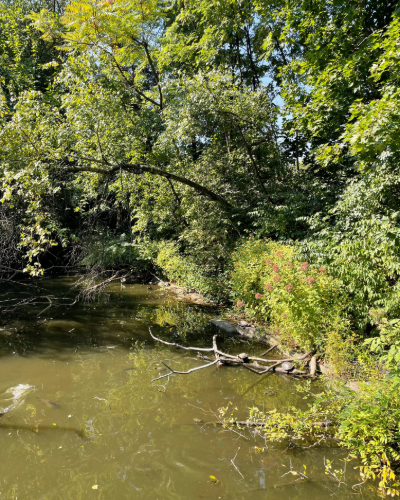
Trees provide homes and food for birds, insects, and other wildlife. The presence of trees has a huge impact on biodiversity. A study showed that the amount of green spaces and trees such as parks and gardens had the greatest influence on an area’s ecology.
Promoting healthy lifestyles
People having access to nature helps them relieve their stress when going outside to walk or run. Planting more trees means investing in our future health. Green areas can improve mental and physical health rates. It reduces stress and lowers the rate of heart disease and skin cancer.
Photo credits: Rian Thomas
References:
New York State Department of Environmental Conservation. (n.d.). *Benefits of urban trees*. https://dec.ny.gov/nature/forests-trees/urban-and-community-forestry/benefits-of-urban-trees
Woodland Trust. (n.d.). *Benefits of urban trees*. https://www.woodlandtrust.org.uk/protecting-trees-and-woods/benefits-of-urban-trees/