03/03/2026
Author James Francisco Bonilla ’76 will share his personal story of a blind Puerto Rican boy in New York who transcends a harrowing childhood to become a lifelong advocate for social justice, in a pair of talks on Wednesday, March 11, at SUNY Cortland.
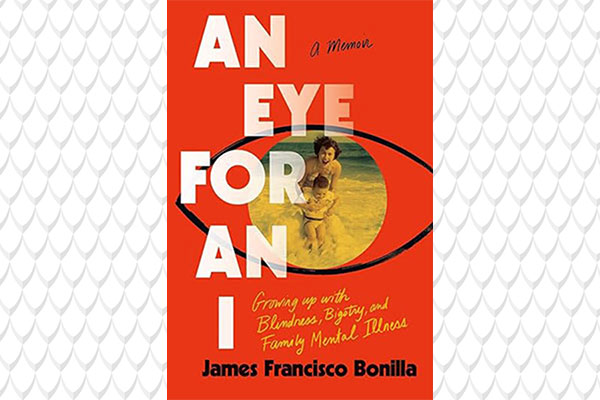
Bonilla, a former recreation education major at Cortland, last November released his memoir, An Eye For An I: Growing up with Blindness, Bigotry, and Family Mental Illness. He will participate in a student panel roundtable that afternoon and later an author’s book reading.
Presented by SUNY Cortland’s Anti-Racism Task Force Education Subcommittee, both events take place in the university’s Corey Union and are free and open to the public.
The student roundtable, titled “Exploring Disability, Bigotry and Trauma: Lessons Learned Through My Cortland Years/Reflections on Identity, Race and Resilience During College and Beyond,” will take place from 2:30 to 4 p.m. in the Fireplace Lounge.
During the second event from 6:30 to 7:30 p.m. in the Exhibition Lounge, Bonilla will read selections from his memoir, published Nov. 4 by University of Minnesota Press.
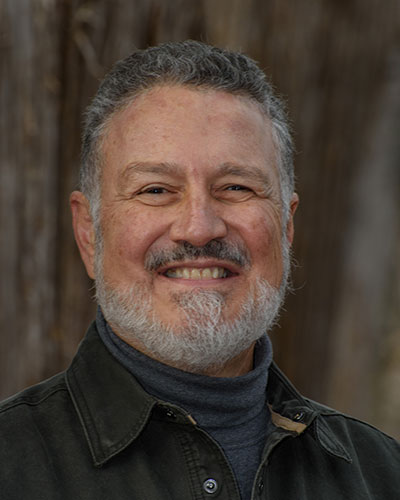
The volume offers an inspiring account of how he found a path through his own suffering to make a difference for others. It includes vivid anecdotes about many of his SUNY Cortland experiences, including his therapeutic recreation and outdoor education programs and his scholarship under the guidance of the colorful late Professor Emerita Marcia Carlson, and reminisces about his study abroad semester in London.
“It is my hope this book will open eyes as well as be useful to folks who struggle with trauma, disability and bigotry of all kinds,” said Bonilla, who is a professor emeritus of organizational leadership and conflict studies at Hamline University School of Business in St. Paul, Minnesota.
After graduation from SUNY Cortland, he earned an M.A. in the psychological education program and an Ed.D. in organizational development and applied group studies from the University of Massachusetts School of Education.
Hamline released an article about Bonilla’s book last fall.
Wrote one reviewer, Beverly Daniel Tatum, “With its intersectional analysis of racism, mental illness and disability, this memoir brings a fresh and inspiring voice to the world of social justice literature.”
A book description noted, “An Eye for an I presents both Bonilla and his aggressors with refreshing nuance and humility, inviting readers to empathize, be inspired and consider their own potential to be of service in a broken, yet beautiful, world.”
Born with congenital cataracts, Bonilla had limited vision in his right eye and none in his left. At age 9, after a classmate hurled a horseshoe at his face in what he recounted as a racially motivated assault, Bonilla’s right eye was injured and he became legally blind.
“Jovencito, it’s going to be lonely being different and yet strong in this world,” Bonilla’s grandmother told him when he was 10. He had come home after defending himself against a bully who had threatened him with violence, making it clear that he didn’t care that Bonilla was blind.
At home, too, he feared physical violence, experiencing the unpredictable outbursts of a single mother suffering from severe mental illness.
Throughout his youth as a Puerto Rican New Yorker, Bonilla was continually failed by educational systems that exposed him to one abuse after another. Searching for relief and inspiration, he discovered an unexpected solace in the natural world, spiritual encounters with Mother Earth that led him toward both personal healing and advocacy.
At 19, a breakthrough in medical technology restored the sight in his right eye, and Bonilla recognized his unique perspective on the struggles of the disabled and marginalized in American life — and his intense will to make a difference.
He seeks to understand generational trauma, and in documenting his growth — physically, mentally and spiritually — his memoir exemplifies the introspection necessary to participate in truly equitable and effective movement building.
Despite the isolation he felt in childhood, Bonilla has come to commit his life to leveraging his differences and strengths toward a collective fight for justice.
He served on the Hamline University faculty from 1996 until 2014. Bonilla taught in the School of Education, the School of Public Administration and the School of Business, working with both undergraduate and graduate students.
In addition to the Anti-Racism Task Force education subcommittee, the event sponsors include Disability Resources, Conley Counseling and Wellness, the Institutional Equity and Inclusion Office, the Multicultural Life and Diversity Office, the SUNY Cortland Alumni Association and the student clubs La Familia Latina and NAACP.
Contact Disability Resources for questions about accessibility, to request accommodations or for more information.