07/21/2026
A new $225,000 grant will create opportunities for SUNY Cortland first-year students to explore the written word in meaningful ways.
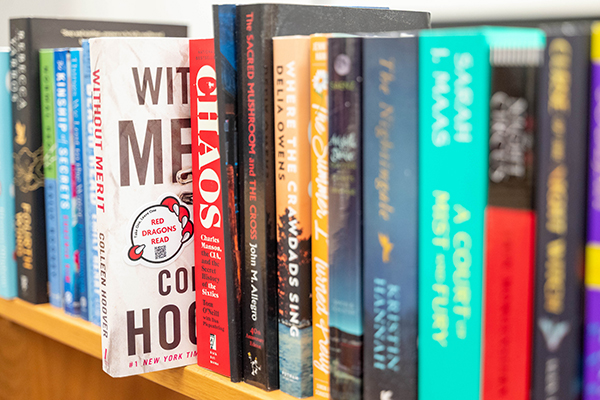
That means emphasizing a book’s paper pages rather than scrolling on a screen.
This fall, incoming students can take a new 100-level course focused on the humanities. The course was developed through a major grant from the Teagle Foundation, a philanthropic organization that aims to strengthen liberal arts education across the country.
“(The course) is really transformative for the student experience,” said Anisha Saxena, associate professor of history and one of several faculty members who helped lead the university’s grant application. “But it’s also bringing faculty and staff together and talking about the texts they love.”
The interdisciplinary project has also relied on the efforts of Abigail Droge, assistant professor of English, Andrea Harbin, professor of English, and Benjamin Wilson, professor of economics, in addition to many other faculty and staff members who provided input during the 2025-26 academic year.
The Humanities 100 course, Books and Big Ideas, will be a new outlet for the study and discussion of educational literature known on campus as “Transformative Texts.”
“They’re texts that students can relate to, inspire them to ask questions, and encourage them to reflect on their personal experiences, society, or political issues,” Saxena said.
“It challenges their thinking, broadens their perspective, and can influence the way they understand themselves and the world around them,” she noted.
Five sections of the discussion-based course will be offered, with a goal to draw in diverse academic interests. Assignments will encourage students to connect readings to real-world issues that matter to them.
Each section of the course will share three selections from the university’s Transformative Text list to help foster a shared intellectual experience across sections. The remainder of the texts will be chosen by the instructor, with at least half of those readings from the shared list.
The course will require physical books and deemphasize screen use, outside of technology needs for accessibility reasons. Students also will be expected to attend events on campus that engage with the shared Transformative Texts, examine course themes and foster student interaction across sections.
“Our hope in prioritizing physical texts is to help students cultivate a deeper attention and engagement through reading, apart from the constant distractions of technology,” said Droge, who specializes in British literature and culture. “By emphasizing the attendance of in-person events and exploring texts through an interdisciplinary perspective, we also aim to show students how literature can create community and be relevant to current social issues.”
Three pilot classes of the course began last spring, with the grant ensuring an expanded course number for the foreseeable future.
In addition, the grant will support existing Transformative Text Series lectures held on campus. Funds from the grant also will go to professional development held at SUNY Cortland’s W.H. Parks Family Center for Environmental and Outdoor Education at Raquette Lake in the Adirondacks for any faculty interested in learning to teach one of the Humanities 100 classes.
Workshops will welcome faculty interested in teaching Humanities 100 as well as those who wish to have their upper-level electives added to a pathway courses collection. Those courses would receive a special designation, allowing students to continue to engage with transformative texts, humanistic inquiries and New York state-related topics and themes throughout their studies at Cortland.