|
|
Issue Number 9 • Tuesday, Jan. 27, 2026 |
Campus ChampionUniversity Police Communications and Security Specialist Sara Catrow helps keep the campus safe while most people sleep. In her overnight job, which she started in 2021, Sara monitors the university’s security cameras and coordinates with UPD officers in the field, quickly and accurately identifying details of interest. During those long nights, she also takes emergency phone calls and assists callers who may require police or medical assistance. Always relishing the chance to help others, Sara is the compassionate, reassuring voice many campus community members hear in times of need after hours at SUNY Cortland. Upcoming eventsTuesday, Jan. 27 Drop/Add Period: Drop/add courses from Monday, Jan. 26, through Friday, Jan. 30, at 4 p.m. Transfer DIY Room Decor with Tau Sigma: 4-6 p.m., Corey Union Fireplace Lounge Karaoke with SAB: 7 p.m., Corey Union, first floor Trivia Night: 9 p.m., Corey Union Exhibition Lounge Wednesday, Jan. 28 EAP: K9 Meekah Spring Walking Challenge: Bring your Cortland ID and meet at the Student Life Center indoor track starting at noon. The walk will begin at 12:15 p.m. Wellness Wednesday: Cat Yoga: Wear loose and comfortable clothing you can move in. Mats are provided and the class is free. Advance sign-ups are required on Cortland Connect for a 20-minute session. 1:30-3:30 p.m., Corey Union, Room 207 and 208. Study Abroad 101: Learn more about study abroad opportunities. 3 to 4 p.m., Old Main Colloquium, Room 220. Thursday, Jan. 29 Welcome Week Resource Fair: Learn about academic support, co-curricular and well-being resources on campus. 11:30 a.m.-1:30 p.m., Corey Union, first floor. Hot Cocoa Kits with SAB: 3-5 p.m., Corey Union, first floor. Part-Time Jobs Info Session: Join virtual session on finding and applying for part-time jobs, plus tips for balancing work and school. Open to all majors and class years. Questions: [email protected]. 4-5 p.m., online. Friday, Jan. 30 International Welcome Celebration: Help welcome new and returning international students and recent study abroad participants. Free food and activities will be offered. Noon-1:30 p.m., Corey Union, first floor. Tuesday, Feb. 3 Disability Resources Open House: The Disability Resources Office and Test Accessibility Services have moved to Van Hoesen Hall. Check out the new sensory friendly room, see its other new spaces and enjoy cookies, beverages and company. 1-3 p.m., Van Hoesen Hall, Room C014. Club Fair: 6-8 p.m., Student Life Center. Wednesday, Feb. 4 Sandwich Seminar: Between Innovation and Lagging Evidence: AI in Special Education: Learn about how research, teacher education and teacher insight can converge to shape an approach to AI in special education. 12:30-1:30 p.m., Old Main Colloquium, Room 220. Wellness Wednesday: Intro to Cross-Country Skiing: Learn the basics of cross-country skiing and practice outside. Warm up afterwards by the firepits with s’mores. No experience needed. Students will be entered in a raffle for a cross-country ski rental for them and a friend. Noon-2 p.m., Student Life Center, Outdoor Pursuits. Arts of Italy: Study Abroad Information Session: Learn about a 10-day, three-credit summer study abroad course taking place in Florence, Venice and Verona. 1:30-2:30 p.m., Dowd Fine Arts Center, Dowd Gallery. Study Abroad 101: Learn about study abroad opportunities. 3-4 p.m., Old Main Colloquium, Room 220. Grad School Info Session: Learn more about the graduate school timeline, best practices for personal statements and more. There will be a question and answer session. 4-5 p.m., online. Abraham Lincoln DeMond 1889 Day: Honor the legacy of SUNY Cortland’s first African American graduate while recognizing the achievements of Black students, faculty, staff and alumni today. Dinner and dessert included. RSVP to attend. 5-8 p.m., Corey Union Function Room. Thursday, Feb. 5 Safer Sex Express: Pick up free pre-made bags of items that promote safe sex. Ask questions and learn more about safe sex habits. 2-3:30 p.m., Neubig Hall lobby. Friday, Feb. 6 Spring Study Abroad Fair: Learn more about study abroad opportunities. 10 a.m.-1 p.m., Corey Union, first floor. |
Cornish-Van Hoesen C-Wing reopens for spring semester01/22/2026After two and a half years of renovation, the C-Wing of Cornish and Van Hoesen halls has reopened at SUNY Cortland as a hub for communication and media studies and vital student support services. The $27 million project included major interior and exterior renovations designed to increase internal space and centralize services. The two linked buildings will now house upgraded facilities for the Communication and Media Studies Department as well as offices for Conley Counseling and Wellness Services, Disability Resources and the Educational Opportunity Program. For many years, Paul van der Veur, professor and chair of the Communication and Media Studies Department, saw the renovation as a way to enhance academic majors including cinema study, communication studies, new communication media and media production. With work now complete, Cornish-Van Hoesen has a new audio production studio, video production studio, on-air radio station, podcasting room and cinema screening room. A student media commons is also bringing outlets such as the Dragon Chronicle newspaper, CSTV and WSUC 90.5 FM into one building for the first time, making it easier for student organizations to collaborate. Production studios feature “industry standard” sound proofing and equipment, which will allow students to develop skills that keep them contemporary to an ever-changing field, according to van der Veur.  “Students will be able to create content using workflows that they will find in broadcast facilities around the country,” he said. “They’re able now to create content for pretty much any platform that they could want, be it broadcast or social media, to a level that would be acceptable at any television station.” Another welcome addition is a classroom specifically designed for public speaking, which lets students easily record and review their progress developing the skill. The resources are something that van der Veur expects to work well for possible journalism projects with local news organizations and with the university’s Entrepreneurship Center. The re-opening of the buildings’ C-Wing also coincides with new courses in podcasting and social media that diversify academic offerings in the department. Loralee Morrow, senior associate facilities program coordinator, said that all studios, classrooms and the screening room are ADA accessible. Other building improvements include:
There will be an official ribbon ceremony to celebrate the reopening in March, but Cornish and Van Hoesen halls will be fully open to begin the spring semester. “Faculty and staff have already taken to moving through,” Morrow said. “Access through the space has been sorely missed while it was closed.” SUNY Cortland hosts fourth De Mond Day01/26/2026Shontay Lundy ’04, the founder of a transformational skincare product line that protects all skin colors, Black Girl Sunscreen, will deliver the keynote address at SUNY Cortland’s fourth annual Abraham Lincoln De Mond 1889 Day on Wednesday, Feb. 4. The event, from 5 to 8 p.m. in Corey Union Function Room, marks the official start of SUNY Cortland’s 2026 Black History Month event series. De Mond Day, which honors SUNY Cortland’s first Black alum, is free and open to the public, but an RSVP to attend the event is requested. A dinner and dessert are included, courtesy of the SUNY Cortland Alumni Association. Event sponsors also include the President’s Office, the Student Government Association and the Institutional Equity and Inclusion Office. SUNY Cortland President Erik J. Bitterbaum will offer remarks, along with Lorraine Lopez-Janove, the university’s chief diversity and inclusion officer, and SUNY Cortland Alumni Association chief diversity officer Ronnie Genee '03. Lundy, of Los Angeles, California, was selected as this year’s keynote speaker because her work challenges a widespread misconception that Black individuals do not need sunscreen, according to organizer Elizabeth Christina Baldi, the Student Government Association director of diversity, equity and inclusion. “Her work addresses an important public health and skincare gap by promoting sun protection for all skin tones,” said Elizabeth, a senior business economics major from Brooklyn, N.Y. “I chose her because she is a woman of color who has built a successful business through determination and innovation, and she leads her brand with an inclusive mission that uplifts and represents underrecognized communities. “Her journey as an entrepreneur and advocate makes her an inspiring speaker for this event.” Raised in Orange County, where majority of her youth was spent in Newburgh, N.Y., Lundy earned a Bachelor’s degree in business economics from SUNY Cortland and an MBA from St. Thomas University in Miami, Florida, along with more than 10 years of middle- and upper-management experience in the car rental industry. Lundy founded Black Girl Sunscreen in 2016 to market the first sunscreen developed specifically to protect melanated skin without leaving a white cast. In addition to making sunscreen tailored for men, women and children of color, Lundy and Black Girl Sunscreen has also created an array of SPF lotions, sprays and the first of its kind SPF infused Sungloss™ lip gloss. “Sunscreen was never marketed to people of color,” Lundy said. “With a lack of research and education, retailers and manufacturers were not providing sunscreen options for us which catered to our skin. A combination of these challenges relayed to where a group of people, an entire demographic, had been left out of a conversation. That’s why I created Black Girl Sunscreen.” Celebrating its 10th anniversary in November 2026, Black Girl Sunscreen has grown to include 24 employees, including four executives. Its products are sold at over 18,000 retail outlets nationwide, along with specialty retailers across the United States, Canada, Caribbean islands and countries around the world, and are available on the company's website.  Lundy, who has partnered with various university dermatology programs, was awarded the 100 Greatest Innovations of 2018 by Popular Science. She was also listed amongst Forbes’ 2021 The Next 1000. Lundy has become an activist for Black women and people of color’s skin health in addition to being a well-known influencer, notably through her podcast, “Shamelessly Shontay,” airing Sundays at 6:30 a.m. Pacific Time on Real 92.3. Shamelessly Shontay is also available on iHeart Radio, Spotify, and Apple Podcasts. Lundy has made appearances on talks shows, including “Good Morning America,” “Sherri,” “The Real, and the “Tamron Hall Show.” In 2024, Lundy hosted a segment of the BET Awards for cable network Black Entertainment Television (BET). Lundy was also honored in 2024 by Cosmetic Executive Women with its Innovation Award, while Black Girl Sunscreen’s Make It Glow SPF 30 continuous spray made Oprah’s “Best Body Sunscreen” in the 2024 First Annual Sun Awards list. Abraham Lincoln De Mond 1889 Day was initiated in 2023. De Mond graduated just 24 years after the Civil War and became a leader in the national fight against the prejudicial policies and segregation that were enforced across much of the United States. Born in Seneca, N.Y., he attended the Cortland Normal School — the institution that later became SUNY Cortland. After graduation, De Mond studied theology at Howard University in Washington, D.C., and became pastor of Dexter Avenue Baptist Church in Montgomery, Alabama, the same church from which Martin Luther King Jr. would one day help launch the civil rights movement. Capture the MomentThe bright, open spaces of the newly renovated Cornish and Van Hoesen halls are welcoming students, faculty and staff back to begin the spring semester. The buildings’ C-Wing benefitted from major interior and exterior updates over the past two-plus years and now house upgraded facilities for the Communication and Media Studies Department, Conley Counseling and Wellness Services, Disability Resources and the Educational Opportunity Program. In Other NewsPresident’s talk points to opportunities, signs of hopeDespite the challenges facing higher education institutions across the country, SUNY Cortland President Erik J. Bitterbaum cited signs of hope during his Spring 2026 State of the University Address on Jan. 22. Among the institutional achievements highlighted, Bitterbaum pointed to the university’s most recent first-year retention rate of 84.2%, reflecting the number of first-time students who continued their studies at SUNY Cortland. That number, based on Fall 2024 data, ranks Cortland second among 13 SUNY comprehensive campus peers. “That’s really extraordinary,” Bitterbaum said. “And it’s because of you — our faculty and staff — and our students. I’d love to maintain that moving forward because we know retention is going to become even more important in the future.” The president addressed approximately 400 faculty and staff members in the Corey Union Function Room to begin the Spring 2026 semester, sharing campus updates and discussing higher education topics facing institutions across New York state and the nation. Challenges such as enrollment declines, cost concerns and shrinking international student numbers remain national trends that all colleges and universities must prepare for, Bitterbaum said. But there are reasons for optimism at Cortland and across SUNY. First-year application numbers continue to climb for the university, surpassing 17,000 for Fall 2026. Additionally, New York state’s executive budget for SUNY includes additional funding for various educational priorities, from internships to college completion programs, as well as a system-wide tuition freeze. “That’s the right way to go — to make it easier for New Yorkers to send their students to college,” Bitterbaum said. “I have confidence that things will improve.” Bitterbaum also referenced recent data from the American Association of Colleges and Universities suggesting that confidence in higher education institutions is strong among employers and hiring managers, with nearly three-quarters believing that a college degree is worth the financial investment. He encouraged faculty and staff members to be aware of the skills that employers will desire in a new generation of students: foundational traits such as critical thinking as well as experiential learning, microcredentials and knowledge of how to use artificial intelligence responsibly. “Companies are still looking for people who can connect dots across teams, make judgment calls and solve problems,” Bitterbaum said. “Though experience with AI is important, it can’t replicate what’s learned in the classroom.” The president offered many examples of recent academic and campus highlights at SUNY Cortland:
During his remarks, Bitterbaum shared a question that he is often asked by alumni, parents and friends with ties to SUNY Cortland: “Who are we as a university?” He provided the example of faculty members who showed support and flexibility to a student whose mother was diagnosed with brain cancer during the semester. The student emailed Bitterbaum and his professors, thanking them for providing understanding and grace during a difficult time. “The truth of the matter is I receive numerous emails recognizing and praising our faculty and staff,” Bitterbaum said. “It’s amazing how you go the extra mile. The commitment that you make in the classroom, on the playing fields, in the residence halls ... it really reverberates. “That’s what I love about our campus — that our primary focus has always been each other and our students, and they tell us that all the time.” SUNY Cortland grad wins statewide honorSaranac Lake (N.Y.) High School principal Joshua Dann ’01, M ’03, didn’t aim for popularity when he expanded a classroom cellphone ban to encompass curbing student cellphone use throughout the school day in 2023, two years before New York state adopted a similar policy. “I never thought that the state would ever make it a law,” Dann said. “I thought it was just a thing in little Saranac Lake, like, ‘We’re going to try to make a difference here.’” The initiative to motivate roughly 380 high school students in this sprawling 685-square-mile rural district to keep their cellphones tucked away was shaped by student feedback and staff observations about the impact of digital distraction. The new policy has reaped a big reward. “To be honest, once it got rolling it was just so much easier because kids had their heads up in the hallways,” Dann said. “Kids were louder in their classrooms because they were socializing. The lunchroom was louder. It was just a remarkable thing.” Now the school sees more engaged classrooms, strengthened peer relationships and a noticeable improvement in overall school tone. And Dann has been handsomely repaid for choosing the harder path. Today, the educator, longtime hockey and lacrosse coach and engaged local community member is clearly revered by students, staff, parents and the Saranac Lake community. Most recently, Dann’s secondary school administrator peers chose the 13-year Saranac Lake district administrator as the 2026 New York State High School Principal of the Year. The award is presented annually by the School Administrators Association of New York State (SAANYS) and the National Association of Secondary School Principals (NASSP). It honors a secondary principal who has demonstrated outstanding leadership, innovation and commitment to student success. Dann will now advance as New York's candidate for the National High School Principal of the Year award, sponsored by NASSP. He will be recognized on Friday, May 1, in Albany, N.Y. In his time at Saranac Lake, Dann has strengthened Multi-tiered System of Supports, expanded student leadership opportunities, implemented trauma-informed staff training and prioritized family engagement, ensuring that communication, decision-making and planning reflect the district’s diverse needs. His high school offers expanded academic opportunities, including seven AP courses, 12 college-level courses, multiple CTE pathways, and two New Vision programs. He developed an academic support program providing daily interventions for at-risk students, contributing to significant improvements in achievement and graduation outcomes. The school’s four-year graduation rate has risen from roughly 83 percent when he began to as high as 99 percent in 2021 and 95 percent in 2024. Dann earned a bachelor’s degree in elementary education and master’s degree in childhood education with a concentration in computer science. He also holds school administrator/supervisor and school district leader certification from Syracuse University. “The (Cortland) teachers pushed you with respect,” he said. “They knew it was hard and they knew it was uncomfortable, but they also knew that to be an effective teacher, you had to be out of your comfort zone. That was a great time for me, because I was nervous and scared and didn’t know where it was going to lead me.” The Saranac Lake native had transferred to Cortland from North Country Community College. Dann at first tried to decline his student teaching assignments with the Syracuse (N.Y.) City School District because he doubted his ability in an urban setting. Wiser heads prevailed. “And when I got there, I fell in love with it. I just felt like it was my calling,” he said. Dann completed his student teaching assignment at the city’s elementary and middle schools before landing a permanent teaching job with the district. In his second year there, he took his class to try ice skating in Cicero, N.Y., although none had ever ice skated before. Dann still has the pictures and some former students remind him about the outing. After about five years of teaching at the elementary and middle school levels, he and his wife, Marcie, returned to Saranac Lake to raise their three daughters. At Saranac Lake, Dann also emphasizes shared leadership. Senior student couriers, school board student representatives and a staff leadership committee all play roles in shaping school operations and policy while teachers lead professional development, collaborate on curriculum design and pilot instructional innovations. Away from school, he’s the current president of the Saranac Lake Administrators Association, president of the Section VII Athletic Council, and vice president of the Saranac Lake Civic Center board. He annually leads the Turkey Trot to support the Saranac Lake Student Needs Fund, which provides students facing financial hardship with essentials and enrichment opportunities. Dann walks more than 100 miles each November, contributing to a cumulative 11-year total of more than $300,000. Dann’s accomplishment burnishes the record of SUNY Cortland School of Education graduates in recent years. Emma Efing ’24 and Kayla Melita ’24 both traveled to Spain after earning Fulbright fellowships, Emma to teach English during the 2024-25 academic year and Kayla to worked as an English teaching assistant. Miranda Kistner ’23 won a Fulbright English Teaching Assistant Award to spend the 2023-24 school year teaching at Colegio Decroly, a high school in Madrid. In 2022, Caitlin Goodwin ’11, M ’16, a social studies teacher at McGraw (N.Y.) Jr. Sr. High School was named New York State History Teacher of the year by the Gilder Lehrman Institute of American History, the nation’s leading organization dedicated to K-12 American history education. The New York State Council of School Superintendents also named Jason Andrews ’97, C.A.S. ’03 the 2019 Superintendent of the Year. Select an image to begin a slide show Chemistry Department solves mystery of flower-based 'fugitive pigment'A long-lost medieval green has been revived in living color thanks to SUNY Cortland’s Chemistry Department. “Iris Green,” a pigment extracted from the petals of blue iris flowers, was popular in the medieval era as an alternative to other, more toxic pigments such as malachite. The distinctive shade appears in many works that have survived to the modern day, especially medieval manuscripts Those manuscripts were far more vivid than we know them to be today, according to Lynn Schmitt, lecturer in the Chemistry Department. But no one — including art conservators — knows exactly what that shade of green looked like. It’s susceptible to fading to a duller yellow with exposure to light. With the loss of its true hue, the artists’ intent gets lost to centuries of fading. Without a reliable modern formulation to remake the pigment, the true appearance of many pieces of medieval art was left unknown. This and other “fugitive pigments,” or pigments that fade over time, create an enduring mystery, one that Schmitt was drawn to. 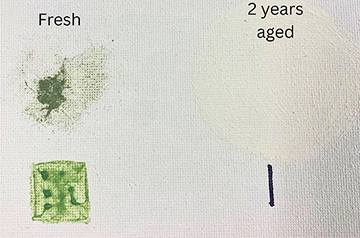 Now, through Schmitt and their students’ work, Iris Green’s formulation is closer to being understood. While others have looked at this pigment, many have simply mistaken it for other greens, like chlorophyll green that comes from the leaves of plants, rather than from the petals. Others have accused Iris Green of having the same coloring molecule found in sap green, which is derived from the buckthorn berry. Medieval texts, though, hold the true answers for how to recreate Iris Green even today. It may have taken long hours of trial, error and testing, “I have a background in medieval studies,” Schmitt said. “I got an accidental minor in it when I kept picking medieval art classes because I thought the art was super cool.” This incidental degree turned into a real passion project. “My interests are in translating medieval texts to meaningful chemistry, figuring out the exact ratios or what we call stoichiometry, of each component, what the structure of the actual pigment is, and then what does it fade into and why is it fading and how can we stop it.” Before joining the faculty at Cortland, Schmitt was a lab coordinator for a federally funded course at Binghamton University called Materials Matter, which focused on the link between art and science. It was there that they first learned about Iris Green. 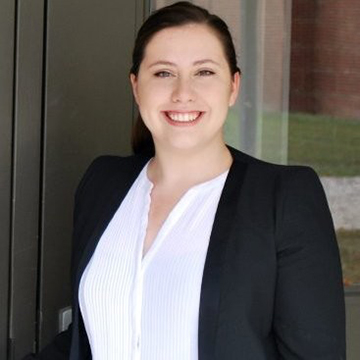 Schmitt liked the idea of reproducing a pigment from medieval manuscripts for lessons due to its nontoxic properties and affordability. But the pigment was far more interesting and mysterious than originally met the eye. Seeing the pigment fade in real time and not having a clear explanation as to why puzzled Schmitt. Additionally, traditional ways of studying pigments are not applicable to pigments derived from plants, which creates a challenge for conservators to get proper information about the work they are tasked with preserving. With more investigation, Schmitt learned that published works sometimes mislabeled the color or were otherwise incorrect. Once Schmitt was at Cortland, they thought the subject could be a great learning project for their students. “I saw this pigment and these pigment formulas and texts and was like, ‘There’s some real chemistry going on here.’” With samples of the original Iris Green recreated from medieval manuscripts, their classes used the spectroscopy resources on campus to begin to solve the fading color puzzle. “The students take a component of the broader research, and they really work to make it their own and see where it takes them and uncover those facts,” Schmitt said. “It’s absolutely a student endeavor as much as it is advised from me.” As part of the project, chemistry major Alyssa Reardon ’25 created an historical pigment library using Fourier transform infrared (FTIR) spectroscopy. The new database will make any future research on fugitive colors at Cortland easier.  “At first I was really nervous coming into the project, as I did not know what to expect,” Reardon said. “But Dr. Schmitt broke things down in a way that was understandable and fun for me. By the end of the project, I had finally understood the importance of every step we were taking, making the experience much more interesting and enjoyable for me.” Reardon is now considering pursuing an online master’s program in environmental engineering through the University of Tennessee, where she was recently accepted. “I feel that this project pushed me out of my comfort zone with chemistry,” Reardon said. Rebuilding the original Iris Green is just the start, Schmitt added. Next is gathering more data, so that art conservators get the puzzle pieces they need to figure out just how much Iris Green fades given a specific amount of time and conditions. That way, when these centuries-old artworks are retouched, they’ll finally be seen and studied as the artists would have wanted them shown. “Now it’s in the aging of the pigment, identifying the structural changes that happen that change the color so much,” Schmitt said. “And then identifying the chemical process that’s going on, so that we can apply things like varnishes or other protective layers to the painting after it’s been retouched in a way that’s not disingenuous to the work.” Filmmaker’s new doc highlights zoo with Red Dragon tiesIf truth is stranger than fiction, then documentary filmmaker Brian Mulvey ’11 relishes seeing it up close and firsthand. Telling untold stories first led him cross country in “American Highway,” a documentary about a long-held road trip ambition that was picked up for release by streaming sites. The Red Dragon alum more recently traveled to South America for a documentary, “Welcome to the Belize Zoo,” on the Belize Zoo and Tropical Education Center — an institute that itself has longtime ties to SUNY Cortland. “The challenge is more so just an interesting opportunity,” Mulvey said. “It was a totally different genre. You can’t interview the animals, even though you’re making a story about them, so you’re talking to people and learning the stories of the people who work with the zoo and look after the animals.”  Sandy True, treasurer for the Belize Zoo Neotropical Conservancy — a foundation that provides support and resources for the zoo, first contacted Mulvey after learning of his previous work. SUNY Cortland Professor Emeritus of Political Science Tom Pasquarello learned that Mulvey would be making the documentary shortly after that. Pasquarello first built ties with the zoo in 1999 while working at Cortland and now serves as the BZNC’s vice president. That partnership with the Belize Zoo, which lists itself as caring for more than 150 animals that represent 43 native species, has created international opportunities for the university. SUNY Cortland faculty have since led many courses there, with students also pursuing internships and volunteer work abroad. In 2013, Cortland finished a voluntary project to make the zoo accessible to more visitors. The partnership also led to guest speakers and a Summer Teachers’ Institute that allows graduate students to visit Belize in a learning and cultural exchange. “(The) fact that Brian is a Cortland alum certainly piqued my interest, but it was the quality of the documentary he made about his trip that led us to hire him,” said Pasquarello.  Creating a documentary means filming a lot more footage than ends up in the final product. But those long hours of recording are only a start, according to Mulvey. During the editing process, he looks for threads of stories within his interviews that can be brought together into an overall theme. While “American Highway” was created with hopes of distribution, “Welcome to the Belize Zoo” was made specifically for use by the zoo in promotion and fundraising. The reception for Mulvey’s short film was very positive. “The Belize Zoo and Neotropical Conservancy is ecstatic about the content and visual impact of the documentary Brian produced for us,” said Pasquarello, who noted that the institute’s social media followers have increased 50% since its release. Film wasn’t always the plan for Mulvey, who graduated with a business economics degree from Cortland before working as operations manager for Treleaven Winery in the Finger Lakes. But even as a senior, he recalled beginning to think about an alternative career that would eventually become a reality. “I always had the interest, but never had the courage to do it,” Mulvey said. In 2021, he decided to set out with friend, Seth Tucker, to record a world slowly recovering from the COVID-19 pandemic.  “I learned just by doing it,” Mulvey said. “That's what was great, learning how to make film and leading to new opportunities. So, we’re very grateful about that.” Having found success in the industry, he’s already been hired for another documentary, “I Hear You, Gen Z.” He’s working with podcast host Raquel Booras, who traveled across the country to hear what young people from diverse backgrounds had to say about topics such as mental health and social change. The production is expected to be released later this year. “And then I want to keep doing stuff like that,” Mulvey said. “I do a lot of freelance videography and editing gigs, but film has definitely sparked a passion for me.” SUNY Cortland professor honored for service and teachingThe New York State Association for Health, Physical Education, Recreation and Dance (NYS APHERD) recently honored SUNY Cortland physical education professor Helena Baert with a first-ever award created for college educators. The more than 100-year-old professional association recognized Baert with its inaugural Excellence in Higher Education Award during the organization’s annual conference in Verona, N.Y. The award was created to spotlight an exemplary higher education faculty member who teaches health education, physical education, exercise science, recreation or dance programs and who has made outstanding contributions to their institution. Nominees are considered for their active involvement in higher education within New York state; state, district and national level professional activities; professional presentations; honors and awards; community service; professional development; quality program delivery; and excellent civility, character and citizenship while demonstrating sensitivity to the needs of students. Baert said being the first recipient is deeply meaningful and humbling. “It represents not only personal recognition, but the shared spirit of growth, learning and service that has truly defined my career,” she said. “To me, this award honors the community that has shaped me, students who have trusted me with their learning, colleagues who have challenged and inspired me and mentors who modeled what it means to teach with integrity and heart.” The award represents the association’s first formal award for members affiliated with universities. Active with NYS APHERD since she joined SUNY Cortland in 2011, Baert is a past president of the association’s Central South Zone and served on the statewide association’s executive board. Having coordinated and assisted with annual zone meetings, Baert is currently planning the upcoming one-day zone conference for Friday, Jan. 23, in SUNY Cortland’s Park Center. “What makes this recognition even more powerful is that it comes from an association whose mission to provide leadership and quality services through health, physical education and recreation and dance professionals, whose current and future has guided much of my journey,” Baert said. “For years, New York State APHERD has been a professional home where I’ve learned, collaborated and grown. Its commitment to advancing our field through connection, advocacy and excellence has continually inspired me to raise my own standards as an educator and a leader.” Baert said her own role models within NYS APHERD have included her SUNY Cortland Physical Education Department faculty colleagues Michael Kniffen, associate professor emeritus, and Matthew Madden, associate professor, and two retired secondary school educators from Waverly, N.Y., Pete and Kathy Girolamo, who stepped up to perform major association responsibilities. She never imagined she would be the inaugural award recipient. “I thought, ‘There’s a lot of other people at NYS APHERD that have come before me that I would consider mentors,” Baert said of her initial reaction to being the very first person nominated by the organization whose members include directors of health, physical education and athletics; health and physical education teachers; recreation and dance professionals; college professors and future professionals. Baert has made a concerted effort to encourage her students to engage with NYS AHPERD, which provides New York State Education Department-approved professional development opportunities and continuing teacher and leader education (CTLE) credits that help teachers meet the state requirement of 100 hours of continuing education every five years. She has strongly encouraged generations of Cortland students to attend the organization’s zone and statewide meetings and became active volunteers themselves. “When I present at NYS APHERD, many attendees that come and see me are my current or former students,” Baert said. “I tell them, ‘I just taught you this in class,’ and they say, ‘I just want a refresher.’ It just warms my heart. To see that means I’m doing something right.” Baert shared her own thoughts about teaching in a short question-and-answer video that was screened during the statewide conference. She said the award reminds her that excellence in higher education is not a fixed destination, but a continuous process of reflection, curiosity and adaption. “My own students have given my work its greatest meaning, reminding me daily why teaching and learning are both acts of service and joy,” she said. “This award is not mine alone,” Baert said. “It brings to everyone who belongs, to everyone who believes in building collective power of our profession to inspire movement, foster connection and advance lifelong learning in health, physical education, recreation and dance.” Select an image to begin a slide show University recognizes teaching, research and serviceThe campus community gathered Dec. 8 to honor 40 colleagues for their achievements during the SUNY Cortland 2025 Teaching, Research and Service Awards Ceremony held in the Corey Union Function Room. “I am continually impressed with the amazing teaching and scholarship accomplished every day by our SUNY Cortland faculty,” said Ann McClellan, provost and vice president for academic affairs, about the event. “Not only do they excel in the classroom by providing innovative teaching, but they also exceed university expectations for impactful scholarship. I am truly lucky to work with such outstanding colleagues,” she said. SUNY Cortland President Erik J. Bitterbaum gave the opening remarks. McClellan announced the awardees. The awards were presented as follows: Award: Excellence in Teaching Award - Tenure Track To: Anisha Saxena, associate professor, History Department Description and previous recipients list of Excellence in Teaching Award Award: Fine Teaching Development Award To:
Description of Fine Teaching Development Award Award: Rozanne M. Brooks Dedicated Teacher Award To: Laura Gathagan, professor, History Department Description and previous recipients list for Rozanne M. Brooks Dedicated Teacher Award Award: Rozanne M. Brooks Internationalized Curricular Development Award To: Kent Johnson, associate professor, Sociology/Anthropology Department Description and previous recipients list for Internationalized Curricular Development Award Award: Excellence in Academic Advising To: Katie Silvestri, associate professor, Literacy Department Description for Excellence in Academic Advising Award Award: Teaching Innovation Grant To: Tyson Luneau, assistant professor, History Department; and Dianne Wellington, Literacy Department Description for Teaching Innovation Grant Award Award: Outstanding Achievement in Mentoring Undergraduate Research To: Christopher Badurek, professor, Geography Department Award: Excellence in Research, Scholarship and Outreach Description: Presented to Cortland faculty and staff who obtained external funding in the previous year. To: Jennifer Kronenbitter, Director of Libraries To: Katherine Hicks, professor, Chemistry Department To: Elizabeth McCarthy, associate professor, Biological Sciences Department To: Eric Edlund, associate professor, Physics Department To: Li Jin, professor, Geology Department; and Andrea Davalos, associate professor, and Mary Beth Voltura, associate professor, Biological Sciences Department To: Mary Cannito-Coville, associate professor, Sociology/Anthropology Department To: Ben Wilson, professor, Economics Department; Andrea Harbin, professor, English Department; and Anisha Saxena, associate professor, History Department To: Bekeh Ukelina, professor, History Department To: Nance Wilson, professor, Literacy Department To: Ryan Wainwright, senior financial aid advisor, Financial Aid Office Award: 2025-26 Faculty Research Program Description of 2025-26 Faculty Research Program Honorees: Obidiah Atkinson and Seunghyun Baek, assistant professors, Physical Education Department; Project Title: “Impact of a Sport-Based Positive Youth Development Program in Rural New York State” Honoree: Laura Davies, professor, English Department; Project Title: “Teaching Argument Writing in High School ELA Classrooms, 2000-2025” Honoree: Laura Eierman, associate professor, Biological Sciences Department; Project Title: “Application of environmental DNA (eDNA) techniques to detect and assess Diadema antillarum abundance and other important species on Belizean coral reefs” Honorees: Xiaoping Fan and Jeongkyu Kim, assistant professors, Physical Education; and Xiaoye Xu, assistant professor, Psychology Department; Project Title: “Examining the Impact of a SEL-Infused After-School Program on Children” Honoree: Laura Gathagan, professor, History Department; Project Title: “25 Women Who Shaped Medieval Lordship” Honoree: Cody Harrington, assistant professor, Childhood/Early Childhood Education Department; Project Title: “Experiences with bar tasks and unit coordination within multiplicative reasoning provide a glimpse into Mathematical Knowledge for Teaching pre-service teachers” Honoree: Mason Kim, associate professor, Political Science Department; Project Title: “The Divergent Paths of Migrant Worker Activism: A Comparative Study of South Korea and Taiwan” Honoree: Tyson Luneau, assistant professor, History Department; Project Title: “Haussmann in the Maghreb: French Colonial Urbanism in North Africa, 1830-1962” Honoree: Hollis Miller, assistant professor, Sociology/Anthropology Department; Project Title: “Eating at Ing’yuq: Archaeofauna and Subsistence Strategies during the Russian Colonial Period” Honoree: Jason Page, assistant professor, Recreation, Parks and Leisure Studies Department; Project Title: “BRIDGE Girls (Building Relationships and Independence through Dynamic Group Experiences): A LEGO® Based Therapy Study” Honoree: Geunhye Park, assistant professor, Health Department; Project Title: “Investigating the Effects of Technology Use on Mental Health Outcomes Among Older Adults During COVID-19: insights from the National Health and Aging Trends Study (NHATS)” Honoree: Maria Timberlake, associate professor, Foundations and Social Advocacy Department; Project Title: “Humanistic Behavior Support: New Teachers and Competing Theories” Honoree: Jeffrey Werner, professor, Chemistry Department; Project Title: “Soluble Products From PET Plastic Degradation in the Aquatic Environment, and Potential Impacts on Oysters” Honoree: Sarah Wolf, assistant professor, Chemistry Department; Project Title: “Understanding Confined Molecular Glasses” Honoree: Xiaoye Xu, assistant professor, Psychology Department; Project Title: “Social contexts and young adults’ emotion regulation in daily life: An ecological momentary study” Award: Dr. Peter Di Nardo ’68 and Judith Waring Outstanding Achievement in Research To: Teagan Bradway, professor, English Department Project Title: “Queer Theory for Everybody” Description and previous recipients list for Outstanding Achievement in Research Classified staff honored for serviceWhen the time comes to arrange travel for work, SUNY Cortland faculty and staff members usually encounter Kathy Timian. Timian, the travel administrator in SUNY Cortland’s Purchasing and Accounts Payable Office, is a calm, helpful and understanding presence for any university employee who makes a trip for their job. She was honored on Dec. 12 with the prestigious 2025 President’s Award for Excellence in Classified Service. Since 2022, Timian has — efficiently, effectively and with a real human touch — handled employee travel reimbursements, administered the Travel and NET Card service, managed job candidate travel expenses and served as the backup official to the procurement card (P-Card) administrator.  “Kathy has consistently gone above and beyond in her travel administrator role,” said SUNY Cortland President Erik J. Bitterbaum. “Her dedication to improving the travel process across campus has been exceptional,” he said. “Her professionalism and genuine care for others has made a significant, positive impact across campus.” The President’s Award for Excellence in Classified Service was created in 2002 to annually spotlight one SUNY Cortland full-time classified service employee “for extraordinary achievement and to encourage the continuation of excellence.” Nominees must have at least three years of continuous service. Supervisors, co-workers or other university community members nominate workers considered for this honor. The honor traditionally is presented at the annual Service Awards Ceremony, a 56-year-old event for classified employees with a holiday luncheon in Corey Union sponsored by the Human Resources Office. At this year’s event, Bitterbaum presented Timian with a plaque to acknowledge her outstanding service to the university. With more than 25 years in the SUNY system, Timian joined SUNY Cortland in Fall 2022 as a program aide/travel card administrator. Previously, she worked at SUNY Morrisville in the purchasing and institutional advancement offices. Before that, she was employed by SUNY Upstate Medical University in Syracuse, N.Y. “Kathy is always willing to pick up the phone to walk someone through a form or go over any questions, such as the status of a travel authorization or reimbursement,” said Timian’s supervisor, Casey Avery, associate director of purchasing and accounts payable. “Kathy has a way of making folks feel heard and understood,” Avery said. “… (She) always puts herself in their shoes and realizes that not everyone handles travel on a daily basis. She explains things in a way for all to understand.” Timian’s flexibility and creativity in her work are what made her stand out as candidate. She has taken the initiative to lead multiple campuswide travel trainings, ensuring that faculty and staff remain well-informed and confident in navigating complex travel procedures. “She’s always thinking of ways to help make understanding the travel guidelines easier for campus,” Avery said. For example, Timian helped create business card-sized informational guides so employees attending to university business away from campus can quickly review the established policies, Avery noted. Stored inside wallets next to the Travel and NET cards, the guides explain which card to use and when. Timian is also very flexible in her approach to informing the campus community. She is willing to juggle her schedule to conduct group, office, department or individual travel trainings as requested. Timian offers multiple tools to help users of the campus travel process. She adapts well to changes in procedures. A thorough professional, Timian always researches answers to questions. When needed, she consults with other SUNY schools or the travel office for the New York State Comptroller before assisting with interpreting travel guidelines. “When others in our office might be overwhelmed with a project, Kathy is always one of the first to ask how she can assist,” Avery said. Timian of West Monroe, N.Y., is known for being an excellent cook and is a big fan of Disney. She is married to Jeff and has a son, Nate, and a granddaughter, Dani. Also during the luncheon, 45 classified staff members were honored for a collective 550 years of service, as follows: 25 YEARS
20 YEARS
**Achieved 20 Years of Service in 2024 15 YEARS
10 YEARS
5 YEARS
Select an image to begin a slide show Cortland wins grant for EOP education majorsSUNY Cortland recently earned a $30,000 grant as part of a new State University of New York initiative that will benefit future teachers in the Educational Opportunity Program (EOP). The competitive grant was awarded to Cortland and several other SUNY partners as part of a goal to make teaching and nursing degrees accessible to more students. The university’s share of funding will allow for extra aid to Cortland education majors already enrolled in EOP. The amount of aid the students receive will vary based on need. It will help with the costs connected to an education degree, including teacher certification and the expenses of student teaching, such as travel, work attire and equipment. Students who meet the requirements of the grant will receive outreach through the university’s EOP office. Kharmen Wingard M ’10, assistant director of EOP, applied for the winning grant and expects the money to promote education as a viable career path to more students. “(It can) remove any kind of burdens or obstacles that our current students in the program may have,” Wingard said. “They receive the reassurance that they can do their student teaching without letting financial obstacles get in the way of that.” Cortland’s program currently provides educational and financial support to 114 students who showed strong academic and personal potential but were at risk of missing out on a college education due to adverse circumstances. In selecting students for the program, priority is given to applicants from historically disadvantaged backgrounds who are the first generation of their family to attend college. They enroll in the same coursework as traditional students and have access to financial assistance, a pre-first-year instructional program called the Summer Institute and EOP-specific counselors and tutoring. Earlier this year, Cortland’s program was also among the first nine SUNY schools to be chosen for a new EOP Career Development Internship, and the only institution to have more than one student be selected. To be eligible for admission to EOP, students must be:
Email [email protected] or visit the program webpage to learn more about EOP at SUNY Cortland. Conley Wellness Wednesday series begins Jan. 28SUNY Cortland will host the Spring 2026 Conley Wellness Wednesday Series featuring speakers, presentations and other programs intended to help students adjust to college life and maintain healthy habits. Primarily sponsored by the Health Promotion Office, the series will take place each Wednesday. Events are free and open to the public. Presentations are planned on topics such as indoor and outdoor fitness, healthy eating habits, mental health and relaxation, interpersonal relationships including hazing prevention, body awareness and the benefits of gardening. A Spring 2026 Wellness Wednesday poster listing all the events can be found at the Conley Wellness Wednesday webpage. The Health Promotion Office also has planned four Safer Sex Express events in different locations during the spring: from 2 to 3:30 p.m. on Thursdays, Feb. 5, Neubig Hall lobby ; March 5, Student Life Center lobby; April 2 in Corey Union steps; and April 30 in Corey Union steps. Each event will offer giveaways and an opportunity to ask questions. Follow @healthycortland on Instagram to learn more about campus events focused on health and well-being. Auxiliary Services announces program grant application deadlineSUNY Cortland Auxiliary Services (CAS) is now accepting program grant applications for the 2026-27 academic year. Applications are submitted online and must be received by midnight on Friday, Feb. 20, 2026. Applicants are asked to read the grant guidelines carefully before applying. Each year, the CAS Board of Directors allocates funds to support grants for a wide range of purposes and projects that enhance the life of the SUNY Cortland community. Although CAS is willing to consider a wide range of ideas, it seeks to avoid duplicating other funding sources or funding projects more properly supported by state funds. Therefore, applicants should first seek funding from primary funding sources. CAS grant funds may not be used for salaries, honoraria, travel normally funded by the university’s budget, or scholarships for SUNY Cortland faculty, staff or students. Funds may not be used to purchase computers, related hardware or software. All purchases will be processed in accordance with CAS’s financial and related GAAP policies. In general, program grant funds may not be used exclusively for food for SUNY Cortland students, faculty or staff. Funding for food may be considered if the food is deemed integral to the success of the program or event. All food shall be provided by CAS. Other grant guidelines are described in the application package and online. For more information or assistance, contact Judy Standish by email or at 607-753-4325.  Suggest a feature story Suggest a feature story
Faculty/Staff ActivitiesEric EdlundEric Edlund, Physics Department, gave a presentation titled "Sensitivity of optical positioning errors applied to the Wendelstein 7-X phase contrast imaging diagnostic" at the 2025 American Physical Society Division of Plasma Physics (APS-DPP) conference in Long Beach, California, on Nov. 17-21, 2025. Bryce FarrellBryce Farrell, Physical Education Department, was featured in an interview for magazine Momentum: Society of Health and Physical Educators, about her students participation in the SHAPE American National Convention and Expo. Rhiannon MatonRhiannon Maton, Foundations and Social Advocacy Department, is the incoming co-editor for Workplace: A Journal for Academic Labor. Workplace is a leading international peer-reviewed and open-access journal published by the Institute for Critical Education Studies, and aims to generate dialogue and publish scholarship and scholar-activism connected to issues of academic labor within and beyond higher education. Maton will be spearheading various projects for the journal, including pursuing journal indexing, refreshing the editorial board, supporting the journal's ongoing development in reach, reputation, and strength, and editing a range of special and regular journal issues. Gillian MertensGillian Mertens, Literacy Department, received the Gary Moorman Early Career Literacy Scholar Award from the American Reading Forum. This award is given to an outstanding scholar in the first five years of their career who has engaged in outstanding research and scholarship. Jared RosenbergJared Rosenberg, Kinesiology Department. was first author on a recently published article, "The effects of a 12-week lifestyle intervention on incretin response during an oral glucose tolerance test in Latino youth with obesity and impaired glucose tolerance," in the Journal of Diabetes and its Complications. Alex VizgaitisAlex Vizgaitis, Psychology Department, recently published an article titled “An Empirical Investigation Into Disorder-Specific Identity Impairment Across Personality Pathology” in the Journal of Personality Disorders. Submit your faculty/staff activity
In Memoriam Elizabeth McCartney, former assistant director of international programs, died on Jan. 13. |
The Bulletin is produced by the Communications Office at SUNY Cortland and is published every other Tuesday during the academic year. Read more about The Bulletin. To submit items, email your information to [email protected]
© 2026 SUNY Cortland. all rights reserved.